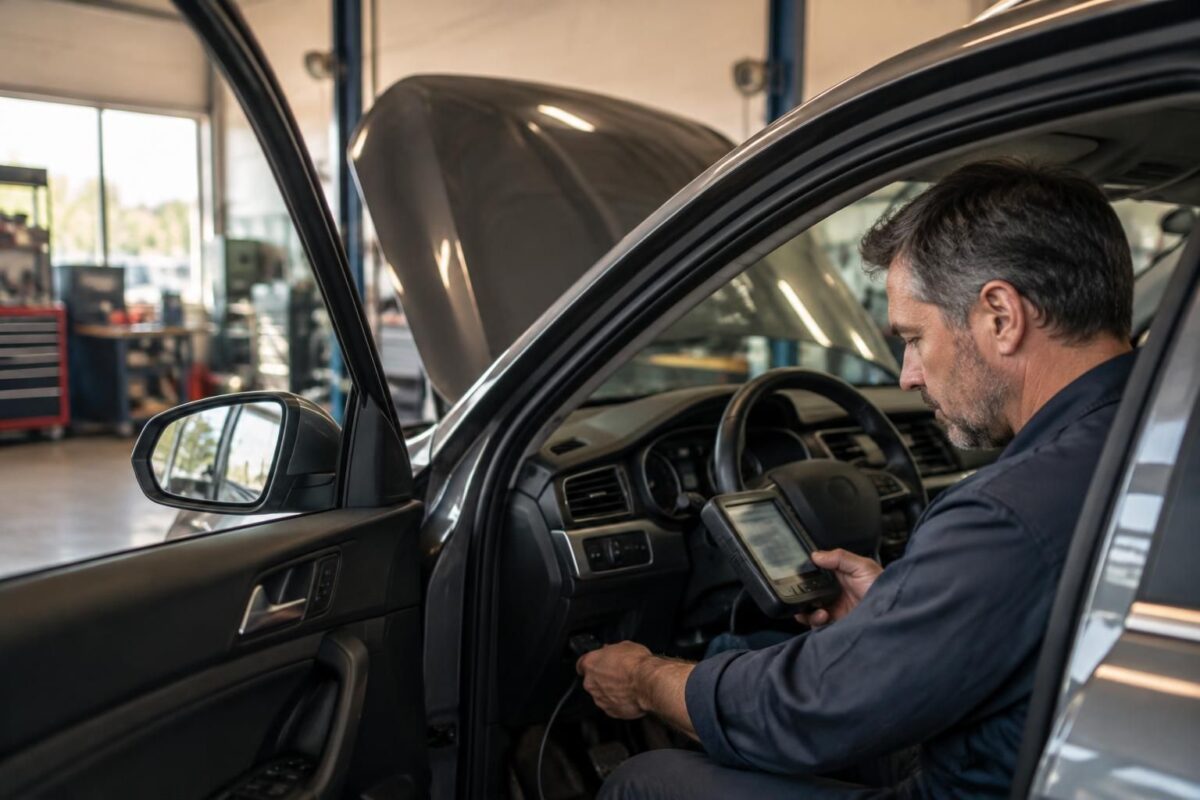
Auto code reader tools: reliable enough to avoid the worst
Hello, it’s Patrick. Yes, a car code reader can help you avoid making the wrong decision: it detects an engine fault, but it doesn’t replace a complete diagnosis. Choose a device that’s compatible with your car and treat the code as a clue, not an instruction to replace a part. If a red warning light comes on, you lose power, or you hear a worrying noise, stop somewhere safe and get the car checked by a professional.
Car code reader: what it can really detect
Do this right away:
- Check that the device supports your car’s make, model, and year.
- Locate the OBD port, often under the dashboard, then consult your vehicle’s manual.
- Note the symptoms: warning light, noise, loss of power, or difficulty starting.
- Read and save the code before attempting to clear it.
- If a red warning light comes on or the car behaves dangerously, stop immediately.
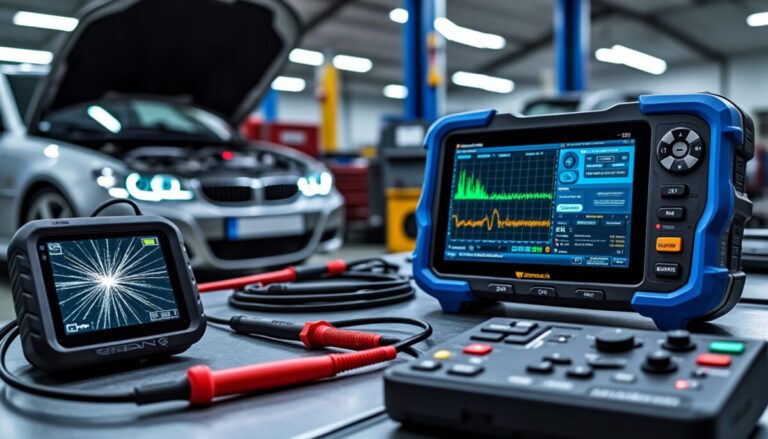
A basic reader mainly identifies engine- and emissions-related faults; more comprehensive models also display live data or scan other control units, depending on the vehicle. To compare the features available, see this guide to useful OBD tools and this article on fault codes that can be misleading.
The OBD port allows the tool to communicate with the onboard electronics. A correct reading helps with troubleshooting, but a code doesn’t always identify the part that needs replacing: a sensor, a wire, a leak, or another component can cause similar symptoms.
A reliable aid, with limitations to be aware of
Reliability depends on compatibility, software quality, and how you interpret the results. A small device may be enough to read an engine warning light and check basic engine data; it won’t necessarily provide access to the ABS, airbags, or transmission.
Devices with built-in screens are handy for reading codes without a phone. Bluetooth models can display graphs and live values, but their use also depends on the app and its updates. A more advanced diagnostic scanner can cover more systems, but that doesn’t guarantee that every function will be available on every car.
| Tool type | Suitable use | Common limitation |
|---|---|---|
| Basic OBD reader | Read and clear some engine codes | Few functions beyond the engine |
| Bluetooth device | Monitor data using a phone | App and compatibility need to be checked |
| Multi-brand diagnostic scanner | Access multiple control units and service functions | Functions vary by model and vehicle |
For occasional use, a basic model may be enough; for several cars or more in-depth checks, a diagnostic scanner may be a better choice. Either way, check compatibility before buying and don’t rely solely on the number of advertised functions.
Interpreting fault codes without making the problem worse
The first rule is simple: save the code and any freeze-frame data before clearing anything. A code indicates an issue detected by the control unit, but not always its exact cause; clearing it too soon can remove useful information for diagnosing the car.
A driver notices an engine warning light after filling up and plugs in a reader. The code points to the emissions system, but a subsequent check reveals a loose fuel cap: replacing a part at random would have wasted time and money.
“A code points to a possible cause, not a part to replace.” This rule helps you keep a cool head: observe the symptoms, cross-check the information, and ask a professional for advice if the fault returns or the vehicle’s behavior changes.
Two situations to distinguish
If the engine warning light stays on steadily and the car drives normally, read the code promptly and arrange an appropriate check. If the light is flashing, the engine is overheating, or power drops significantly, stop somewhere safe: continuing to drive may make the damage worse.
A generic reader can’t always access the ABS or airbag systems. Vehicle safety systems require particular attention: if a corresponding warning light comes on, have the vehicle checked rather than trying to clear the code at random.
Three-step procedure for using an OBD reader
- Step 1: park the car on a safe surface, switch off the engine, and plug the reader into the OBD port. Turn on the ignition as instructed in the device manual.
- Step 2: start the scan and note the codes and related symptoms. Check the code definition and compare it with the signs you’ve observed; don’t order a part based on this alone.
- Step 3: have the cause checked or repaired, then read the codes again. Clear them after the repair, not instead of getting a diagnosis.
For car maintenance, a reader can also help identify an intermittent fault using recorded data, depending on the available functions. Most importantly, it lets you arrive at the garage with concrete information and ask better questions.
What level of reader should you choose to avoid unpleasant surprises?
For checking an engine fault now and then, a basic wired model may do the job. To monitor live parameters or work on several vehicles, compare the functions, updates, and systems covered; a more expensive tool is only worthwhile if you actually use its features.
Don’t confuse reading with repairing: a device can help you understand a fault, but it can’t confirm on its own that the car is safe. For a fault related to the brakes, steering, or airbags, caution and professional advice should come before looking for a quick fix.
Can an OBD reader find every fault?
No. It reads the information it can access, often just the engine data on a basic model. A mechanical problem or a fault in another control unit may require additional checks.
Should you clear the fault code after reading it?
No, not before you’ve noted the code and investigated the cause. Clearing a fault doesn’t repair the problem; the warning light may come back if the issue persists.
Will a basic reader work with every car?
Not necessarily. Check compatibility with the model, year, and supported protocols. Having an OBD port doesn’t guarantee access to every system.
Can you drive with the engine warning light on?
It depends on the warning light and how the vehicle is behaving. A steady light with no significant symptoms calls for a prompt check; a flashing light, overheating, or loss of power means you must stop somewhere safe.
Thanks for reading; best wishes, Patrick