Essential car tools: how to avoid those that sit unused in the cupboard
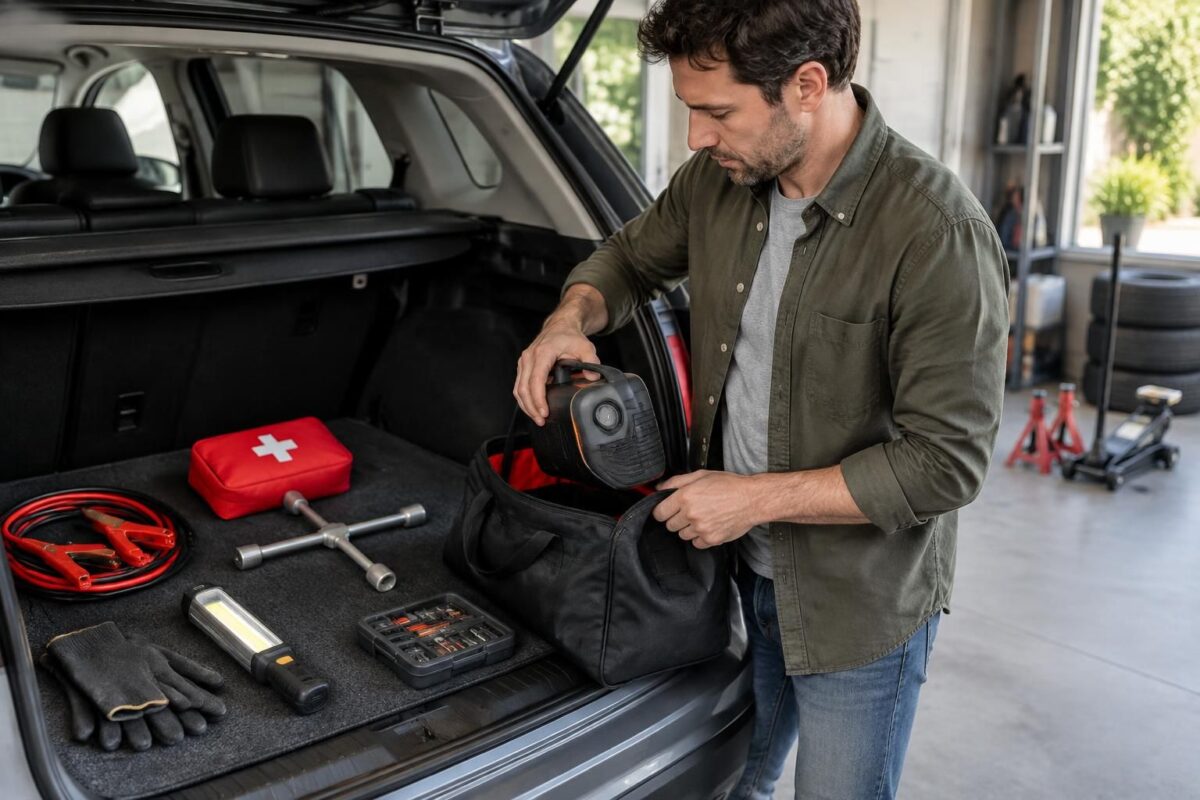
Hi, it’s Patrick. To avoid tools gathering dust, choose them based on the breakdowns you can actually handle, then check them twice a year. The starter trio is simple: safety, flat tires, and batteries. The rest depends on your car, your journeys, and your skills. A useful car repair kit fits in the trunk without turning it into a workshop.
Do this right away:
- Check whether your vehicle has a spare tire, a jack, and a lug wrench.
- Test the flashlight and portable jump starter, or inspect the jumper cables.
- Keep gloves, a pressure gauge, and a warning triangle within easy reach.
- Remove duplicate tools and anything incompatible with your car.
- Make a note of any missing equipment before buying anything.
To put together a kit that suits your needs, start with the tools to keep in your car, then add to it based on your journeys and the jobs you know how to do. These tips on useful tools for home car maintenance and equipment that saves time help you avoid unnecessary purchases.
Choose car tools based on your actual needs
The essential car tools are not the same for everyone. A driver who mostly drives in the city may not need towing equipment, while a long trip through a remote area calls for a reliable flashlight, an emergency blanket, and an offline GPS.
Start with the essential car equipment: a warning triangle, a high-visibility vest within easy reach, a first-aid kit, a flashlight, and gloves. Then add what you need for a flat tire or a weak battery. “The best tool is one that solves a real problem and that you know how to use.”
| Situation | Priority equipment | What to check |
|---|---|---|
| Dead battery | Jumper cables or portable jump starter | Compatibility and charge |
| Flat tire | Spare tire, jack, wrench | Tire pressure and condition |
| Stopped at night | Flashlight, vest, warning triangle | Batteries and quick access |
| Loss of tire pressure | Pressure gauge or inflator | Vehicle’s recommended tire pressure |
A compact pressure gauge lets you check tire pressure without taking up much space. An inflator can help in the event of a slow leak, but it does not repair a damaged tire: it is only intended to help you reach a safe place if the situation allows.
Two quick examples to avoid unnecessary equipment
If you mostly drive in the city and roadside assistance is easy to reach, prioritize safety, visibility, and a suitable jump starter. If you often travel far from populated areas, add an emergency blanket, an offline map, and a backup solution for your tires.
A three-step process for a well-equipped trunk
- Step 1: Check your vehicle’s manual and identify the tools provided, the jacking points, and the tire pressures. Depending on the model, the spare tire may be replaced by a tire repair kit.
- Step 2: Fill in only what’s missing with tools you know how to use. Jumper cables, a portable jump starter, a multitool, and duct tape can come in handy, but each has its limits.
- Step 3: Do a quick check twice a year. Check the batteries, the jump starter’s charge, the condition of the cables, the spare tire, and the first-aid kit.
A common scenario: a driver takes out the jack by the roadside, then discovers that the supplied wrench doesn’t fit the locking wheel nuts. A test at home would have revealed the problem in a few minutes.
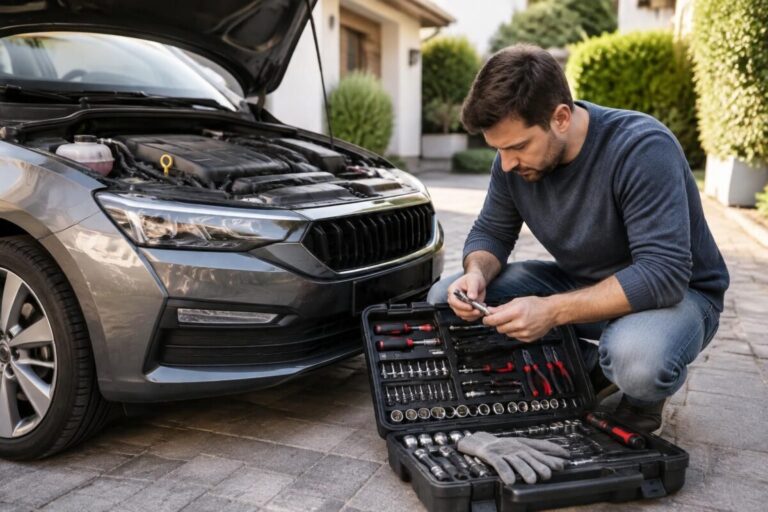
For minor repairs, useful mechanics’ tools also include a suitable wrench, a few sockets, and a screwdriver. If you do car maintenance at home, build your collection gradually: versatile car tools can come in handy, but they don’t replace a specialized tool when the job calls for one.
Car tool storage: find everything without clutter
Car tool storage matters just as much as choosing the tools. Keep safety equipment together in an easily accessible bag, and put heavier tools in a secure compartment so they don’t move around when braking.
An ice scraper is most useful in winter; a tow strap requires a suitable attachment point and proper handling. A car fire extinguisher can round out your equipment, provided it is secured properly and its expiration date is checked. A window breaker/seatbelt cutter should be accessible from the seat, not hidden under luggage.
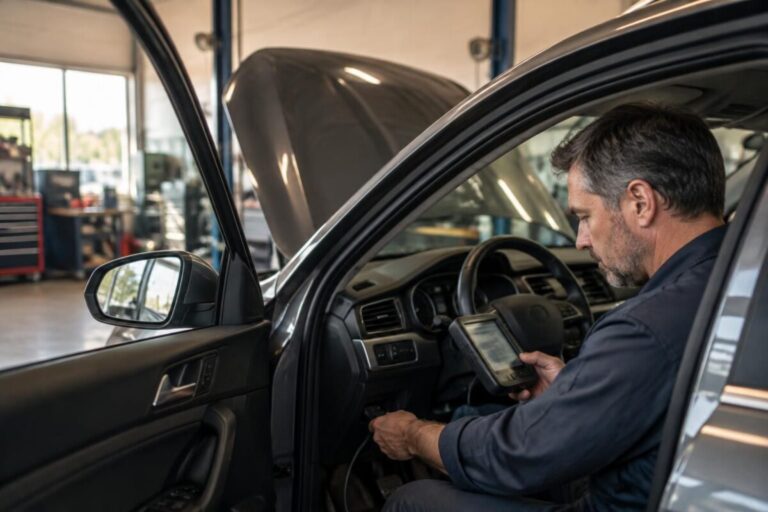
For more involved mechanical work, keep the limits in mind: a jack alone is not enough to work under a car. Diagnostic tools or tools for brake and battery repairs should be chosen based on the vehicle and your skill level, not on impulse.
Practical questions about essential car tools
Which tools should you keep in your car as a priority?
Start with safety equipment, a flashlight, gloves, a pressure gauge, and the tools needed for a flat tire or a weak battery. First, check what’s already provided with the vehicle.
Should you choose jumper cables or a portable jump starter?
Jumper cables require another vehicle and proper use. A portable jump starter offers greater independence, but its charge and compatibility should be checked regularly.
How often should you check the equipment in your trunk?
A check twice a year is a good rule of thumb. Also check the equipment before a long trip and after each use.
Can an inflator replace a spare tire?
No. It can help if tire pressure is low or there is a slow leak, but it does not replace a tire or a proper repair. Follow the manufacturer’s instructions and don’t drive on an unsafe tire.
Thanks for reading; best wishes, Patrick