
3 Body Repair Methods by Depth
Hi, it’s Patrick. To repair car bodywork, choose polishing if the scratch is in the clear coat, touch-up paint if it reaches the color coat, and professional repair if it goes down to the primer or metal. A good diagnosis helps prevent further damage to the surface. The fingernail test and angled lighting are simple ways to get started. Here are some useful steps to help you proceed methodically.
Do this immediately:
- Wash and dry the area before touching the scratch.
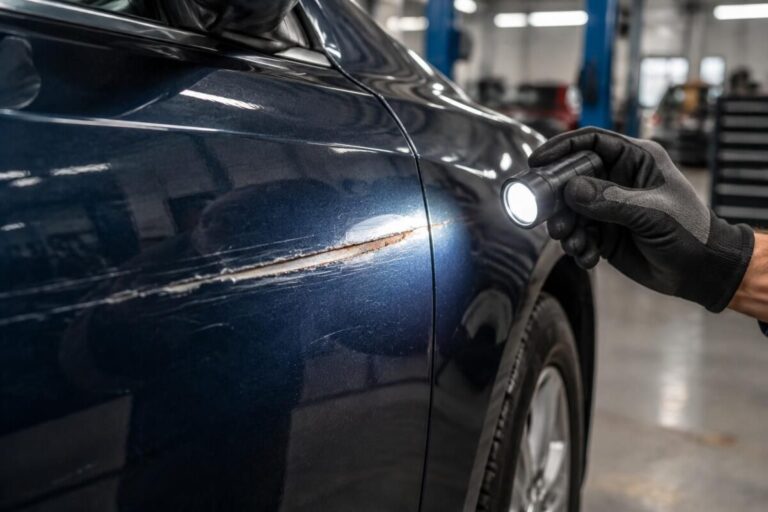
- Look at it under angled light.
- Gently run your fingernail across it: if it catches, the damage is probably deep.
- Check whether the primer or metal is visible.
- Quickly protect any area where the bare metal is exposed to reduce the risk of corrosion.
For a more accurate diagnosis, see this guide on assessing a scratch with the fingernail test and these tips for preparing for a repair before you start.
Three car body repair methods based on scratch depth
Automotive paint consists of several layers: the primer, color coat, and clear coat sit on the body panel. The method depends on which layer has been affected, as well as the size and location of the damage. If in doubt, start with the least aggressive treatment.
| Damage depth | What you may observe | Suitable method |
|---|---|---|
| Clear coat only | Light mark, often barely visible when wet | Polish and car body polishing |
| Paint affected | Visible scratch, color coat damaged, metal not visible | Touch-up pen or suitable paint |
| Primer or metal exposed | Pronounced gouge, gray layer or metal visible | Preparation, possible filler, and professional repair |
1. Superficial scratches: polish without damaging the clear coat
Superficial scratches and fine marks stay within the clear coat. They often appear after washing too vigorously or light rubbing. If the surface feels smooth and the mark fades when wet, an automotive polish may be enough.
Clean and dry the bodywork, then apply a small amount of product with a clean microfiber cloth. Work gently, in small areas, and follow the manufacturer’s instructions. Toothpaste is sometimes suggested as a quick fix, but a polish designed for cars is more suitable and easier to control.
2. Scratch in the paint: apply a precise touch-up
If the color coat is damaged but the metal is not visible, a touch-up can protect the area and make the defect less noticeable. Find the vehicle’s paint code, often shown on a label inside a door or under the hood. A close match may still be noticeable, especially on metallic paint.
Clean and degrease the area, then apply the paint in very thin layers using a touch-up pen. Let it dry according to the instructions and apply the supplied clear coat if the product calls for it. If the mark is wide, an automotive spray paint requires careful preparation to avoid differences in finish.
3. Deep scratch: protect the body panel and leave extensive damage to a professional
When the primer or metal is visible, a simple scratch-removal compound will not repair the damage. A body shop can sand the area, apply automotive primer, then repaint it and apply clear coat. Body filler is mainly used to reshape a dented surface, not to cover a scratch without proper preparation.
A dent accompanied by a mark can sometimes be fixed with paintless dent repair if the paint is still intact. For more significant deformation, body panel straightening becomes necessary; if the panel is too badly damaged, replacing it may be an option. “A lasting repair starts with a properly prepared surface.”
If it’s a fine scratch in the clear coat, try gentle polishing on a small area. If the metal is visible or the paint is flaking, protect the area and seek professional advice.
A three-step process for repairing the damage without making it worse
- Assess the depth: wash the area, shine a light across it from the side, and perform the fingernail test without scratching. If a mark catches your nail or reveals another layer, it needs more than a simple polish.
- Choose the right method: polish for the clear coat, matching touch-up paint for the color coat, and a body shop if the primer, metal, or a large area is affected. Avoid sanding if you don’t know which layer you might reach.
- Protect the area and check the result: observe the drying times, then inspect the area from several angles. If the color is uneven or the scratch is still gouged, stop trying and ask for an estimate.
A driver had rubbed a door with a dry cloth to remove a mark. The dust caused more scratches: rinsing the area first would have prevented this minor additional damage.
Cost, limits of DIY repairs, and prevention
Professional polishing often costs around 50 to 150 euros, depending on the area and condition of the clear coat. A touch-up or complete repaint can cost more; for a bumper, expect to pay around 200 to 400 euros in some cases, depending on the model, extent of the damage, and integrated equipment. Request several estimates using clear photos, then compare the details of the proposed work.
DIY repairs are best suited to light marks. With a deep scratch, a poorly matched color or a layer that is too thick can make the repair more noticeable. A professional has the tools and techniques to prepare the surface and blend the finish.
To reduce the chance of new marks, rinse the car before rubbing it, use a clean wash mitt, and avoid worn brushes. Protective wax can help preserve the clear coat, but it cannot prevent all stone chips or scuffs.
Frequently asked questions about car body repair
How can you tell if a scratch is deep?
Shine a light across the area from the side and gently run your fingernail across it. If your nail catches, or if the primer or metal is visible, the scratch probably goes beyond the clear coat.
Can polish remove all scratches?
No. It can reduce some marks that are limited to the clear coat, but it cannot repair missing paint or exposed metal.
Can you use a touch-up pen yourself?
Yes, for a small area where the paint is damaged. Choose the exact paint code, clean the surface, and apply several thin coats according to the product instructions.
When should you contact a body shop?
Contact a professional if the metal is visible, the scratch is extensive, the bodywork is deformed, or you want a very discreet finish.
Thanks for reading; best wishes, Patrick