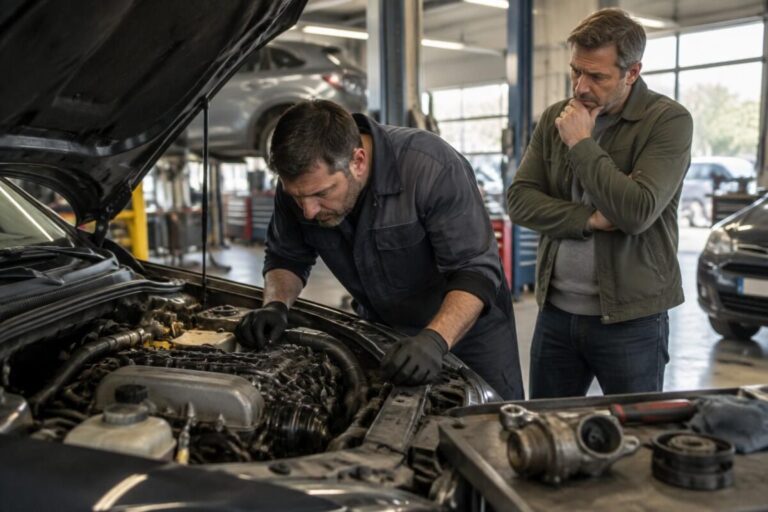

Basic car repair: how to choose without paying twice
Hello, it’s Patrick.
To avoid paying twice, insist on a clear diagnosis, a written estimate, and your approval before each additional repair. Compare prices, ask for the replaced parts to be returned, and check the warranty before handing over your car. In my article, the approach is simple: understand the problem, set clear terms for the work, and check the result.
What to do right away:
- Describe the symptoms precisely and say when they occur.
- Ask for a mechanical diagnosis before approving the replacement of any parts.
- Make sure the estimate specifies labor, spare parts, and the total cost.
- Do not approve any additional work without a new estimate.
- Ask for an itemized invoice and the warranty terms for the repairs.
To choose your tools before carrying out a small repair, see this guide to the right tools for repairing your car without a workshop and these tips on how to maintain your car with greater peace of mind.
Choosing a mechanic without risking a second bill
Choosing the right mechanic isn’t just about the price on display. Look at how clearly they explain things, how precise the estimate is, and how the shop plans to check what’s wrong.
Ask whether the diagnosis is chargeable and whether its cost will be deducted from the repair work. Comparing prices is useful, but make sure you’re comparing equivalent services: an original part, an aftermarket part, and a reconditioned part may not cost the same.
A driver heard a clunk at low speeds and had been offered the replacement of several components. A second shop first checked for a loose fastener: the diagnosis avoided costly parts and work unrelated to the noise.
“A precise estimate prevents a lot of misunderstandings.” To check what should be included in your request, see the guidance from the National Consumer Institute on car repairs.
Repair estimate: what to check
Before signing, check that the document describes the problem identified, the work to be carried out, and the estimated price. The estimate should also separate parts from labor and list any diagnostic or storage fees.
Ask to be called if the mechanic finds another problem. Without your approval, the shop should not carry out additional work simply because it seems useful. Keep a copy of the approved estimate and any written correspondence.
| What to check | Question to ask | Why it’s useful |
|---|---|---|
| Diagnosis | What is causing the symptoms? | Avoid replacing parts at random. |
| Parts | Are they new, aftermarket, or reconditioned? | Understand price and warranty differences. |
| Labor | How many hours are estimated? | Spot items that aren’t clearly itemized. |
| Additional work | Will you ask for my approval before continuing? | Keep control of your car budget. |
Prices vary depending on the model, region, and problem. For a major repair, getting a second opinion may take a little time, but comparing estimates can help you distinguish necessary work from an overly broad proposal.
Car repair: what to do if the problem returns
Go back to the garage promptly with the invoice, estimate, and a precise description of the symptoms. Note the date, the conditions in which they occur, and any warning lights. Avoid having more repairs done elsewhere before asking the original shop to check its work.
A repair that doesn’t solve the problem doesn’t automatically mean you don’t have to pay: it all depends on the work ordered, the diagnosis, and the circumstances. Explain the problem in writing and ask for it to be checked. The professional’s obligations and possible remedies depend on the case; these tips on disputing a bill you’ve paid twice offer practical guidance.
If the dispute continues, gather the documents, send a written complaint to the garage, and seek an expert assessment or a consumer mediator, depending on the situation. The warranty on repairs and applicable rules are worth checking with the evidence in hand; don’t withhold payment without appropriate advice.
A three-step process to avoid unnecessary repairs
- Step 1 — Describe the problem: mention any noises, vibrations, smells, or warning lights, and specify when they occur. A well-described symptom helps guide the diagnosis without prescribing a part to replace.
- Step 2 — Approve the work: ask for an itemized estimate, compare the possible solutions, and set a spending limit. Any additional work must be explained and approved before it is carried out.
- Step 3 — Check the result: collect the invoice, check that the stated repairs have been completed, and ask for the old parts if possible. If the symptom returns, contact the garage promptly and provide the supporting documents.
If it’s an urgent problem that makes the car unsafe, have it checked before driving again. If it’s routine maintenance you can plan ahead for, compare estimates and schedule the work to protect your car budget.
Regular car maintenance can help prevent breakdowns, but it doesn’t justify replacing a part without an explanation. Always ask what was checked and why the work is necessary: it’s a simple way to avoid unnecessary repairs.
Paying the bill without throwing your car budget off balance
Some garages offer installment payments, but the terms vary depending on the company, the amount, and the finance provider. Offers may range from a few installments to a longer term; check the fees, payment schedule, and consequences of a declined payment before signing.
Some networks have offered installment payments for certain services, sometimes for amounts of up to a few thousand euros, depending on the offer and the garage. This can help spread the cost of an unexpected expense, but it doesn’t make the repair cheaper: keep the total amount in mind and don’t spend more than your budget can handle. To understand the possible terms, read this overview of paying for a car repair in installments.
If installment payments aren’t offered, ask whether the garage has an in-house option and compare it with the options available through your bank. Any interest and fees should be included in the actual cost, not just the monthly payment.
Useful questions to ask before leaving your car at the garage
Can I ask for a second estimate?
Yes. For a major repair, compare estimates that describe the same work and parts of a comparable category. Also ask whether the initial diagnosis is chargeable.
Do I have to pay if the problem returns after the work?
The answer depends on the agreed work and the cause of the persisting problem. Contact the garage again promptly in writing, keep the supporting documents, and ask them to check the car before ordering any further repairs.
Are installment payments always interest-free?
No. The terms vary depending on the garage and the finance provider. Check the total cost, any fees, and the payment dates before agreeing.
Can I ask for the replaced parts?
You can ask the garage, especially if you want to understand the work carried out. However, some parts may be taken back by the supplier or be subject to specific rules; make your request before the work is done.
Thanks for reading; best wishes, Patrick