Car on a slope: your oil level can lie
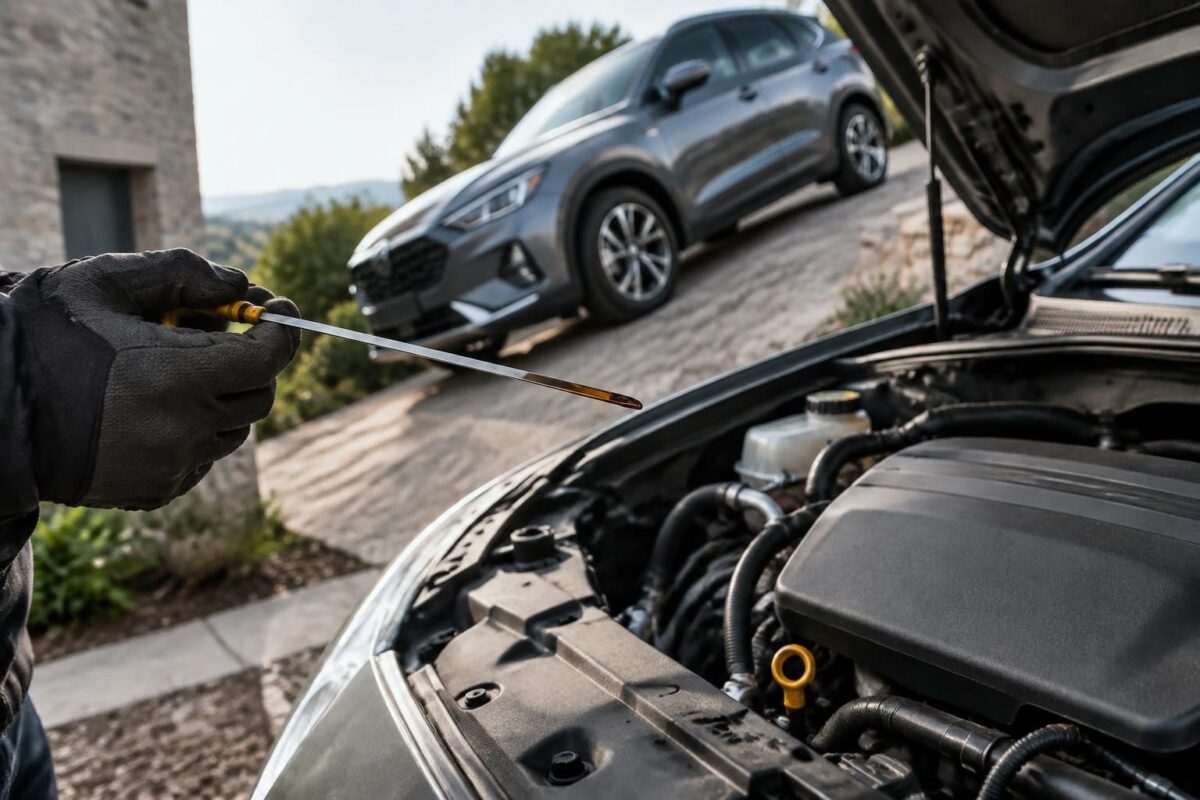
Hi, this is Patrick. On a car parked on a slope, the oil dipstick can show a misleading level: park on level ground, wait a few minutes, and check again. The vehicle’s angle shifts the oil in the oil pan and can cause an inaccurate reading. Before topping up, checking on level ground helps avoid correcting a level that was already fine. This simple habit protects your engine and makes car maintenance safer.
Do this right away:
- Park the car on ground that is as level as possible.
- Turn off the engine and wait a few minutes, or follow the waiting time specified in the owner’s manual.
- Remove the dipstick, wipe it clean, push it all the way back in, then pull it out again to read the level.
- Check that the mark is between the minimum and maximum indicators.
- Don’t add oil based solely on a reading taken on a slope.
A reliable reading requires following the procedure specified for your model: with the engine cold or after it has been off for a short time, depending on the manufacturer. To find out what to do if the level is above the maximum, see this guide to excess oil; to avoid measurement errors, also check out these common checking mistakes.
Why a car parked on a slope gives a false oil-level reading
When the car is tilted, the engine oil collects on one side of the oil pan. The dipstick then measures a local height, not the total quantity, so the result may seem too high or too low.
One anecdote sums up the trap: after parking his car uphill, Marc thought it was low on oil and added some. On level ground in the parking lot, the dipstick then showed a level above the maximum; checking again before topping up would have saved him from this mistake.
A reading taken on a slope is not a reliable reference: always confirm the result on level ground before taking action.
Two situations to distinguish
If the level only appears low when the car is on a slope, check it again on level ground before adding oil. If the dipstick still shows a level above the maximum after several correct readings, don’t ignore the excess: it needs to be removed or its cause investigated.
How to check the oil level correctly
The method matters just as much as the vehicle’s position. “A good reading starts with a car parked properly,” as a simple maintenance principle reminds us: level ground and a clean dipstick can clear up a lot of uncertainty.
- Step 1: Park the car on level ground, apply the parking brake, and turn off the engine. Wait for the time recommended in the owner’s manual, often a few minutes depending on the model and situation.
- Step 2: Pull out the oil dipstick and wipe it with a clean cloth. Push it all the way back in, then remove it without tilting it.
- Step 3: Read the oil mark between the indicators. If the level is too low, add a small amount of the correct oil and check again; if it is too high, avoid driving until the level has been checked or corrected.
If you want to review the purpose of the dipstick and how to read it, this practical guide to the dipstick complements these steps.
What to do if the level remains above the maximum
Confirmed excess oil can be removed with a suitable pump, sometimes through the dipstick tube, or by partially draining the oil. If you don’t have the equipment or the excess is significant, have a garage handle it: it’s better to correct the level properly than to guess.
Excessively high oil levels can cause the oil to aerate and disrupt lubrication. Depending on the engine and the amount of excess, oil may also reach the intake or exhaust, foul components, and contribute to blue or white smoke, burning smells, leaks, or misfires.
Smoke, a leak, or an unusual noise: turn off the engine as soon as you can do so safely and seek professional advice. These signs do not in themselves prove that there is too much oil, but they do warrant a prompt inspection.
Quick guide by situation
| What you notice | Recommended action |
|---|---|
| Reading taken on a slope | Check again on level ground before adding any oil. |
| Level above the maximum after checking on level ground | Don’t add oil; have the excess removed. |
| Smoke, burning smell, or leak | Limit use of the vehicle and get it diagnosed. |
| Level rising without adding oil | Have a mechanic look for a mechanical cause, particularly oil dilution. |
Avoid a misreading next time you check
Check the level at regular intervals, and also before a long trip if the owner’s manual recommends it. Always add oil in small amounts and check after each addition: the dipstick responds quickly, and going above the maximum does not improve engine protection.
If the level rises without you having added oil, don’t just remove the excess. Fuel dilution or another problem may be responsible; a professional can inspect the oil and investigate the cause.
The right approach: check on level ground, measure twice, then act. This routine reduces errors and helps protect the engine without unnecessary work.
Frequently asked questions about oil levels on a slope
Can a car parked on a slope make it seem like it is low on oil?
Yes. The angle shifts the oil in the oil pan and can make the level appear too low or too high. Check again on level ground before topping up.
How long should I wait before reading the dipstick?
The waiting time depends on the model and the manufacturer’s procedure. Generally, wait a few minutes after turning off the engine, then check the instructions in your car’s owner’s manual.
Can I drive if the dipstick shows a level above the maximum?
Avoid driving with confirmed excess oil. Have the level corrected promptly, especially if you notice smoke, a leak, a burning smell, or unusual operation.
Why does the oil level rise without adding oil?
A persistent rise may indicate oil dilution or another mechanical problem. A garage can inspect the engine and determine the cause.
Thanks for reading; best wishes, Patrick