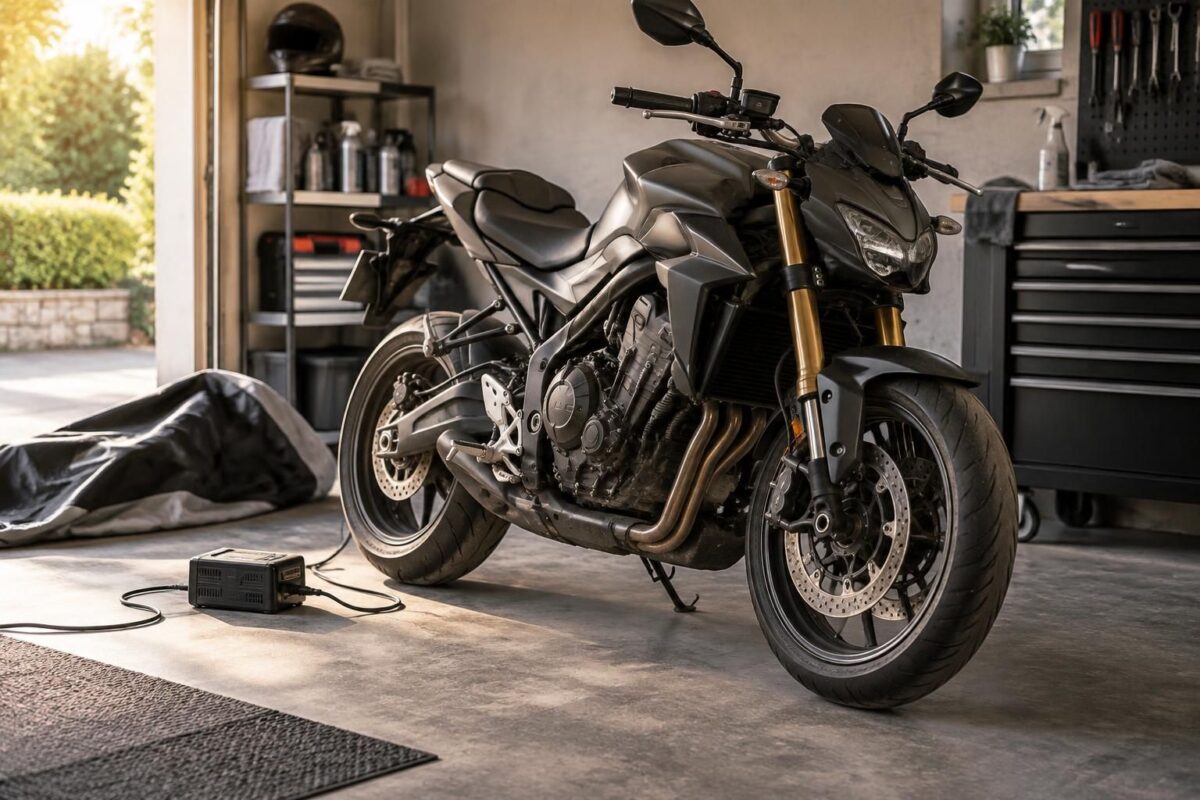
Motorcycle Stored in the Garage: Does It Need Servicing?
Hello, it’s Patrick. A motorcycle that sits in the garage needs regular maintenance: check it every month and follow the maintenance schedule set by its manufacturer. Even when it isn’t being ridden, it can deteriorate and may still be subject to the legal requirement for insurance if it is still roadworthy.
Do this right away:
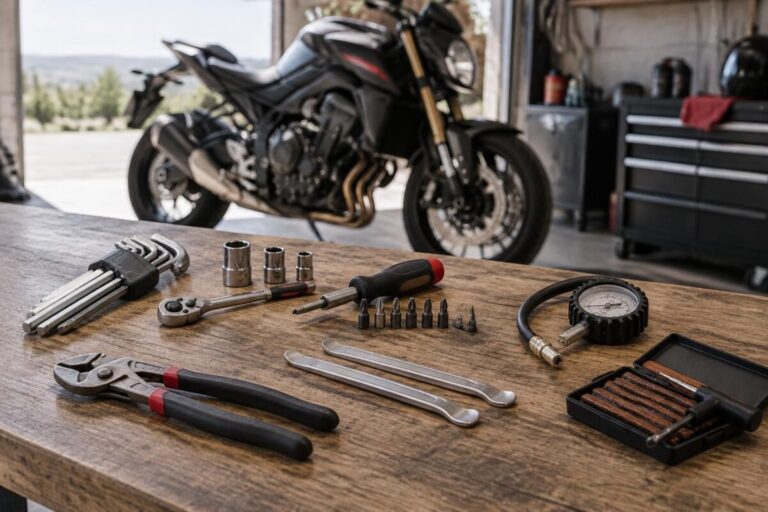
- Check the tire pressure and inspect their condition.
- Check the motorcycle battery and use a suitable battery maintainer if necessary.
- Look for any signs of leaks under the engine.
- Make sure the motorcycle is stable and its storage area stays dry.
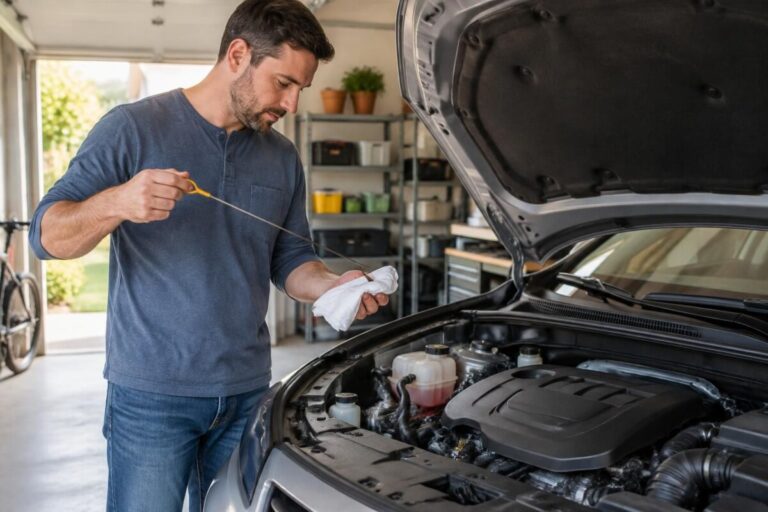
- Check the manual for oil change intervals and periodic checks.
A motorcycle in the garage isn’t necessarily protected from damp, a discharged battery, or a tire that deforms. To tailor maintenance to how you use it, also read these tips on maintaining a motorcycle that is ridden infrequently and on precautions to take when using a cover.
Motorcycle out of use: checks that help avoid unpleasant surprises
A motorcycle that is out of use continues to age. Damp can encourage corrosion, tires can lose pressure, and the battery can discharge, even if the odometer doesn’t move.
Once a month, give it a visual check: inspect the cables, hoses, accessible fluid levels, and the floor beneath the motorcycle. “A quick check today often prevents a difficult restart tomorrow.”
During winter storage, one rider found his motorcycle with a flat battery after a few weeks without checking it. Since then, he checks its condition regularly and connects a compatible battery maintainer: a small step that avoids a lot of hassle in spring.
Motorcycle maintenance: battery, tires, and chain
For the motorcycle battery, follow the instructions in the manual and those provided by the charger manufacturer. A suitable battery maintainer can help during a long period out of use; however, avoid leaving an unsuitable device connected unattended.
Check the tire pressure when the tires are cold before riding again, using the values specified by the manufacturer. If the motorcycle stays in the same place for a long time, moving it slightly from time to time can help limit tire deformation.
Clean and lubricate the chain according to the manufacturer’s recommendations. Fuel precautions vary depending on the model and storage duration: consult the manual rather than improvising with an additive or draining the tank.
Motorcycle oil changes and protecting the engine during storage
Mileage isn’t the only factor to consider for a motorcycle oil change. Time elapsed and the manufacturer’s recommendations matter too, as oil and other fluids don’t stay in optimal condition forever.
Protecting the engine also means storing the motorcycle in a clean, dry place, where it is stable and protected from dust. A breathable cover is often more suitable than a waterproof one that traps condensation.
Don’t start the engine for a few seconds just to “run it.” If you start it, let it reach normal operating temperature and prioritize a full ride when the motorcycle is roadworthy and properly insured.
Choosing motorcycle maintenance based on how long it will be out of use
Motorcycle maintenance depends on the model, its age, and the conditions in the garage. The table provides general guidelines: the manufacturer’s manual remains the reference for intervals and required tasks.
| Item | Practical check | Remember |
|---|---|---|
| Battery | Check its condition and charge regularly | Use only a compatible battery maintainer |
| Tires | Inspect their condition and measure pressure before riding | Follow the manufacturer’s specifications |
| Engine oil | Follow time- and mileage-based intervals | A long period out of use does not cancel scheduled maintenance |
| Chain and controls | Check for wear, tension, and lubrication | Refer to the model’s manual |
Before starting the motorcycle, first check the tires, brakes, lights, and make sure there are no leaks. If the battery is weak or the engine struggles, don’t keep trying: find the cause before setting off.
Two situations to recognize quickly
If your motorcycle stays in the garage for a few weeks, focus on checking the battery, tires, and any leaks. If it is out of use for several months, prepare it for storage according to the manual and ask a professional which procedures are appropriate for your model.
Motorcycle sitting in the garage: don’t neglect insurance
Maintenance does not replace insurance. In France, a motorcycle that is still roadworthy must generally have at least third-party liability insurance, even if it never leaves the garage; this coverage protects other people, not necessarily your motorcycle.
Theft, fire, or damage while parked require appropriate coverage. Ask your insurer which protections remain active with a winter-storage or off-road policy, and check the requirements regarding anti-theft devices and where the motorcycle is parked.
A motorcycle that is simply broken down or has a flat battery is not automatically exempt from insurance. Before cancelling, get written confirmation of your situation from your insurer: the conditions under which a vehicle can be considered unroadworthy should be assessed carefully.
Three-step procedure before getting back on the road
- Step 1: Inspect the tires, battery, brakes, chain, and fluid levels, then look for any leaks or corrosion.
- Step 2: Carry out any maintenance due according to the manual, including an oil change if it is due.
- Step 3: Check your insurance and safety equipment, then take a short, cautious first ride if everything is in order.
If a brake seems seized, a tire is damaged, or the engine doesn’t start normally, don’t force it back into use. Having it checked at a repair shop can prevent a breakdown from getting worse.
Frequently asked questions about maintaining a motorcycle in the garage
Should you change the oil if the motorcycle has been ridden very little?
Yes, if the time interval specified by the manufacturer has been reached. Low mileage does not replace the maintenance schedule specified for the model.
Should you start a motorcycle regularly during the winter?
Not necessarily. Avoid starting it for just a few seconds; follow the manual’s recommendations and only take a full ride if the motorcycle is roadworthy and insured.
Can a motorcycle without a battery be left uninsured?
Not automatically. Removing the battery is not enough to establish that the motorcycle is unroadworthy; ask your insurer for written confirmation before cancelling.
How often should you check a motorcycle that sits in the garage?
A monthly visual check is a practical way to spot a leak, a drop in tire pressure, or a battery problem. Maintenance intervals remain those specified by the manufacturer.
Thanks for reading; best wishes, Patrick