
Garage tools: which ones help beginners avoid mistakes
Hello, this is Patrick.
To avoid beginner mistakes, choose a few reliable tools, use your car’s technical data, and always secure the vehicle before getting underneath it.
A large, cheap tool set is no substitute for the right tools: it may be missing the right socket, a torque wrench, or safe lifting equipment. Start with simple jobs, then add to your tools based on the work you actually do.
What to do right away
- Read your vehicle’s manual and identify the fluids, lifting points, and specified torque values.
- Take photos of connections and parts before disassembling anything.
- Check tire pressure, fluid levels, and lights before buying specialized tools.
- Get a secure hydraulic jack and jack stands for any work under the car.
- Buy tools suited to your vehicle first, rather than a set full of bits you’ll never use.
To put together a well-rounded first tool kit, read this guide to which tools to buy first for a home garage and these tips on identifying the tools that are genuinely useful for routine maintenance. The idea is simple: buy tools for the jobs you plan to do, not based on the size of the set.
The beginner’s trap: buying more instead of buying the right tools
Large tool sets are appealing because of their price and the number of pieces they contain. However, fragile bits or missing sizes can damage a fastener and turn a simple job into a complicated repair.
The useful rule is to invest in tools you’ll use often: sockets, a ratchet, combination wrenches, and measuring tools. For accessories you’ll rarely use, it’s better to check whether you need them before buying. A metric set from 8 to 19 mm already covers many common jobs.
Hand tools for tackling your first jobs
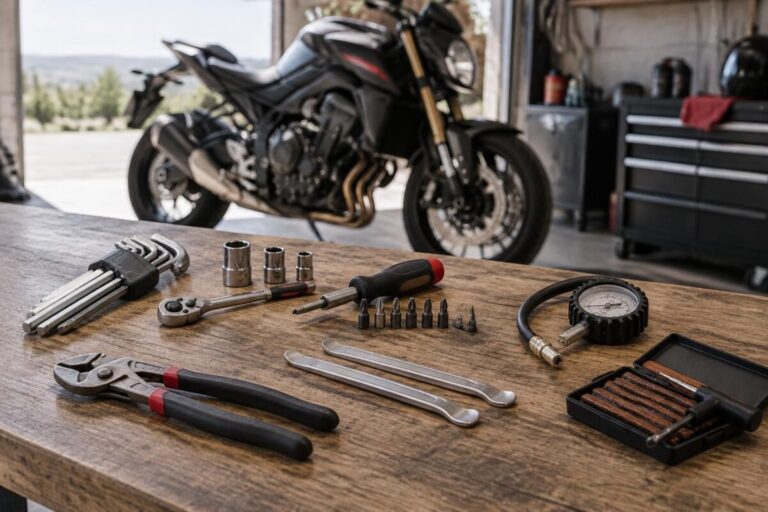
A socket set with 1/4-, 3/8-, and 1/2-inch drive sizes offers versatility. Extensions and deep sockets make it easier to reach recessed fasteners; a universal joint helps in tight spaces, but is no substitute for a good straight-on fit.
Add combination wrenches, flathead and Phillips screwdrivers, and Torx and hex bits. Some European vehicles also use XZN, or triple-square, fasteners: a Torx bit is not interchangeable. The wrong profile can round off a screw head as soon as you apply force.
Measure and diagnose instead of guessing
A torque wrench prevents you from tightening wheels and other important fasteners by guesswork. Always follow the torque specified for the exact model: overtightening can damage a thread, while insufficient tightening can allow a part to come loose.
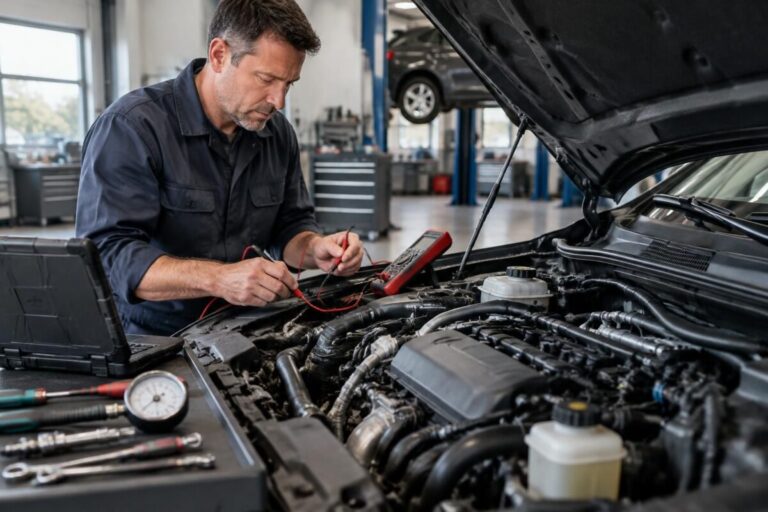
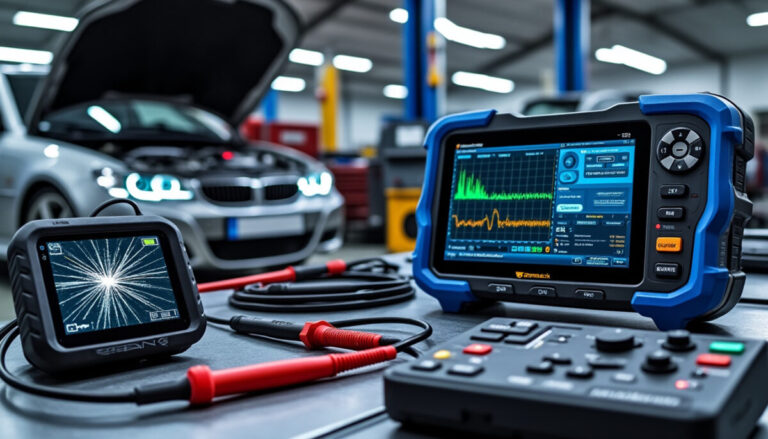
An automotive multimeter helps you check a battery, electrical continuity, or a fuse. OBD diagnostics supplement these checks by reading fault codes, but a code alone does not prove that a sensor needs replacing: a damaged connector or wire can produce a similar symptom.
An inspection light, a telescoping mirror, and a tire pressure gauge may not be exciting, but they help you avoid working blind. An oil filter wrench can also be useful for an oil change, provided you choose a model that fits the filter installed in your car.
| Priority | Tool or equipment | Mistake avoided |
|---|---|---|
| Essential | Metric sockets, ratchet, and combination wrenches | Forcing a fastener with the wrong tool |
| Essential | Torque wrench suited to the required torque values | Tightening a critical fastener by guesswork |
| Essential | Jack, jack stands, and wheel chocks | Working under a car that is not properly supported |
| Useful | Multimeter and compatible OBD reader | Replacing a part without checking the fault |
| Depending on the job | Oil filter wrench, drain pan, and funnel | Spilling fluid or damaging the filter |
| For advanced work | Brake bleeder | Improvising when bleeding a brake system |
Lifting and protection: safety before tools
A hydraulic jack is for lifting the vehicle, not holding it up. Before working underneath, park the car on firm, level ground, chock the wheels that remain on the ground, and place jack stands at the points specified by the manufacturer. Make sure they are rated for the vehicle.
A secure hydraulic jack is part of a setup that includes jack stands, wheel chocks, and a stability check. Never get under a car supported only by a jack, even for a job that takes just a few seconds.
Garage safety equipment should include, at a minimum, safety glasses and gloves suited to the job. Add proper ventilation, rags, and a suitable fire extinguisher. A battery booster and smart charger are useful, especially for cars that are off the road or equipped with an AGM battery.
The right way to choose tools for your home auto garage
Imagine Léa, who wants to change her car’s oil and replace its air filter. Before ordering a large kit, she checks the manual, confirms the filter part number, and identifies the lifting points. She finds that a metric socket set, a torque wrench, a drain pan, and the right oil filter wrench are all she needs for the job.
Her mistake would have been buying an advanced OBD reader or a brake bleeder before she needed one. These tools have their place, but they are no substitute for following the manufacturer’s procedure or having the experience needed to work on a brake system.
A three-step process to avoid buying the wrong tools
- Define the job. Start with a specific, accessible task, such as checking fluid levels or replacing a filter. Consult the manual and information specific to your vehicle.
- Prepare your tools and safety measures. Check socket sizes, required torque values, OBD reader compatibility, and the stability of the vehicle while raised. Take photos of components before disassembly.
- Work without rushing. Work on one system at a time, keep screws in order, and check your work before driving again. Record the date, mileage, and parts replaced.
Jobs fall into three levels: simple checks that require no disassembly, routine maintenance that requires preparation, and advanced work such as replacing a timing belt or clutch. Stay at the first level until you fully understand the steps and risks involved in the next one.
Frequently asked questions about essential auto garage tools
How much should I budget to get started?
Your budget depends on the jobs you plan to do. Start with reliable hand tools, safe lifting equipment, and a suitable torque wrench; add diagnostic and specialized tools based on your vehicle.
Is an OBD reader enough to find a fault?
No. It displays codes and sometimes live data, but diagnosing a problem requires checking the symptoms, connections, and electrical measurements before replacing a part.
Can you work under a car using the factory jack?
No. The factory jack is for changing a wheel under the specified conditions, not for supporting the vehicle during a repair. Use suitable jack stands on stable ground.
Should I buy a brake bleeder right away?
Not necessarily. It is a tool used for work on the brake system, which requires the correct procedure. If you are a beginner, get someone experienced to help or have a professional do the job.
Thanks for reading! I’d love to hear what you think in the comments. — Patrick