Engine Testing Tools: Which Ones Help Avoid Unnecessary Repairs
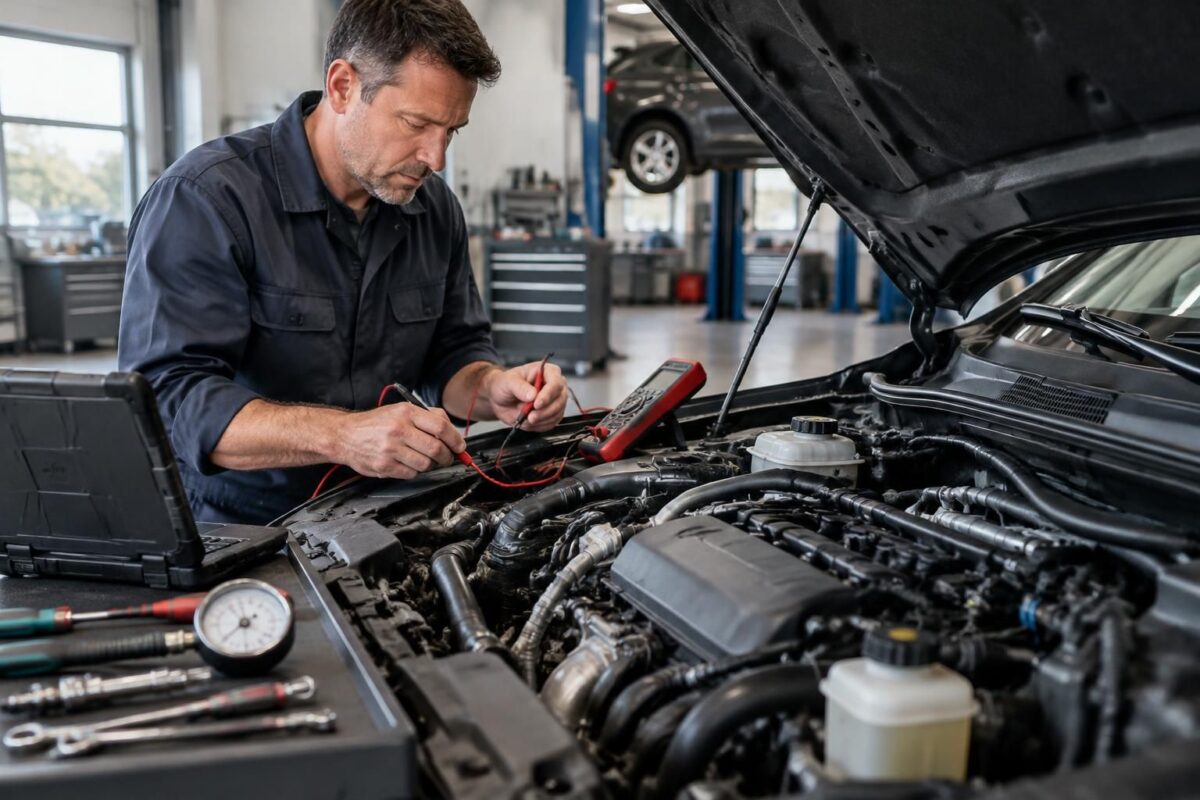
Hi, this is Patrick. The tools that most often help you avoid an unnecessary repair are an OBD2 scanner, an automotive multimeter, a battery tester and, depending on the symptoms, a compression tester or an oil pressure tester.
A warning light or difficulty starting is not enough to condemn an engine. To avoid replacing parts at random, start by noting the symptoms, then confirm each possible cause with an appropriate measurement.
What to do right away:
- Note the warning lights, noises, smells and conditions in which the problem occurs.
- Check the battery and connections before blaming the engine.
- Read the fault codes with an OBD2 diagnostic scanner.
- Inspect fluid levels, visible leaks and accessible hoses.
- Do not drive if you notice smoke, a strong burning smell or overheating.
To choose suitable accessories, see this selection of engine tools. The detailed steps in a methodical engine diagnosis can also help you confirm a possible cause without replacing parts too soon.
Which engine testing tools to choose based on the symptoms
Each tool answers a specific question. An OBD2 scanner reads electronic faults, while a compression tester helps check the mechanical sealing of the cylinders. Targeted measurements help distinguish between an ignition, fuel delivery or compression problem.
| Tool | What it checks | When to use it |
|---|---|---|
| OBD2 diagnostic scanner | Fault codes and engine data | Engine warning light or irregular operation |
| Automotive multimeter | Voltage, continuity and resistance | Checking a circuit, sensor or power supply |
| Battery tester | State of charge and starting capacity | Slow or impossible starting |
| Compression tester | Pressure produced in the cylinders | Loss of power or difficulty starting |
| Oil pressure tester | Actual pressure in the lubrication system | Oil warning light or concerning mechanical noise |
| Engine leak detector | Fluid, oil or gas leaks | Smell, marks on the ground or a drop in fluid level |
| Exhaust gas analyser | Composition of the exhaust gases | Checking combustion or abnormal emissions |
An OBD2 scanner points you in a direction, but it does not always identify the exact cause. A sensor-related code may be caused by the sensor itself, its wiring or another fault affecting the reading, so check before replacing anything.
Engine diagnosis: spot the clues before taking measurements
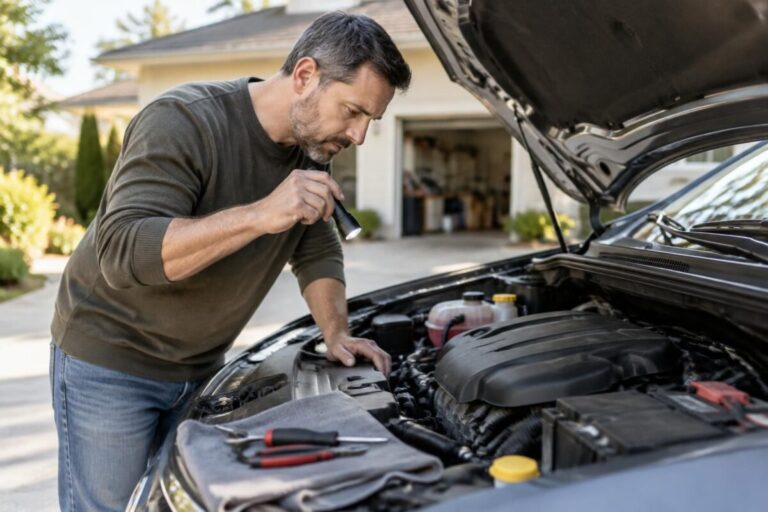
Start by looking and listening for visible and audible signs. Corroded terminals, a leak, a damaged belt or a burning smell can already point you toward what to check. Knocking, squealing or an unstable idle should also be noted, along with when the symptom occurs.
If the fault appears only when the engine is hot or under hard acceleration, note those conditions: they can guide your measurements and help you avoid a false lead. A fault code is not a complete diagnosis, and an engine warning light does not automatically mean the engine needs replacing.
A driver had been given a quote to replace the starter after several difficult starts. The battery tester revealed that the battery was too weak: replacing the starter was unnecessary.
“Measure before replacing, and you avoid paying twice.” This rule also applies to an electrical circuit tester or an automotive oscilloscope, which can help check an intermittent signal or an electronic control when basic tools are not enough.
3-step procedure to avoid an unnecessary repair
- Step 1: Make the vehicle safe and observe. Park the car, switch off the engine and note the warning lights, noises, smells and leaks. If there is smoke or overheating, do not restart the engine.
- Step 2: Check the simple causes. Check the battery, visible connections, fluid levels and OBD2 codes. Compare the results with the manufacturer’s data rather than relying on a universal value.
- Step 3: Confirm before repairing. Choose the appropriate test: compression, oil pressure, leak detection or electrical checks. If the result is still unclear, ask for a professional diagnosis before ordering parts.
If the engine is slow to start, begin with the battery tester and the connections. If there is a loss of power along with smoke or mechanical noise, do not push the engine and have it checked promptly.
When to move on to more advanced engine tests
Low compression may point to a mechanical problem, but the results must be compared across cylinders and interpreted according to the vehicle model. An oil pressure test also requires an appropriate procedure: the warning light alone cannot measure the actual pressure.
An engine leak detector can help locate a leak, while an exhaust gas analyser provides information about combustion. These checks are particularly useful when symptoms persist despite basic electrical checks.
Live electrical testing and circuit checks involve risks. Do not work on high-voltage components or a running engine unless you have the necessary equipment and skills; a workshop can complete the diagnosis using specialised equipment.
Best practices for reliable results
Use a tool that is in good condition and suitable for the vehicle. Record the codes, readings and test conditions; this record helps you compare the results after a repair and identify an intermittent fault.
Do not replace a part based solely on a code or a single measurement. Comparing the results with the manufacturer’s specifications is essential, because acceptable values vary depending on the engine and the situation.
Which OBD2 diagnostic scanner should I choose to get started?
Choose a model compatible with your vehicle and capable of reading engine codes. Advanced features vary by make and model.
Does a fault code necessarily tell you which part to replace?
No. It often identifies a circuit or a symptom. Check the sensor, its wiring and the operating conditions before replacing a part.
When should I use a compression tester?
Use one in particular if there is a loss of power, difficulty starting or irregular operation, following the procedure appropriate for the engine.
Can you test oil pressure yourself?
The test requires suitable equipment and work on the oil circuit. If you are not familiar with the procedure, have a professional carry out this check.
Thanks for reading; best wishes, Patrick