Beginner OBD2 Tools: Which Ones Save You Time
Hi, it’s Patrick.
To save time, start with a Bluetooth OBD2 reader that’s compatible with your car and a clear car diagnostic app.
A beginner OBD2 tool can quickly identify an engine fault, but it doesn’t replace a mechanical inspection. The right choice depends mainly on vehicle compatibility, the features you need, and ease of use.
What to do now
- Check compatibility with your car’s make, model, and year.
- Choose a reader that displays fault codes and their descriptions.
- Choose a Bluetooth connection if you want to use your phone.
- Check whether the app lets you read live data.
- Don’t clear error codes before noting the faults displayed.
To better tell a useful scanner from a gimmick, also check out this guide to car diagnostic tools for beginners and these tips on choosing a car scanner without automatically going for the cheapest option.
Bluetooth OBD2 reader or standalone unit: which should you choose?
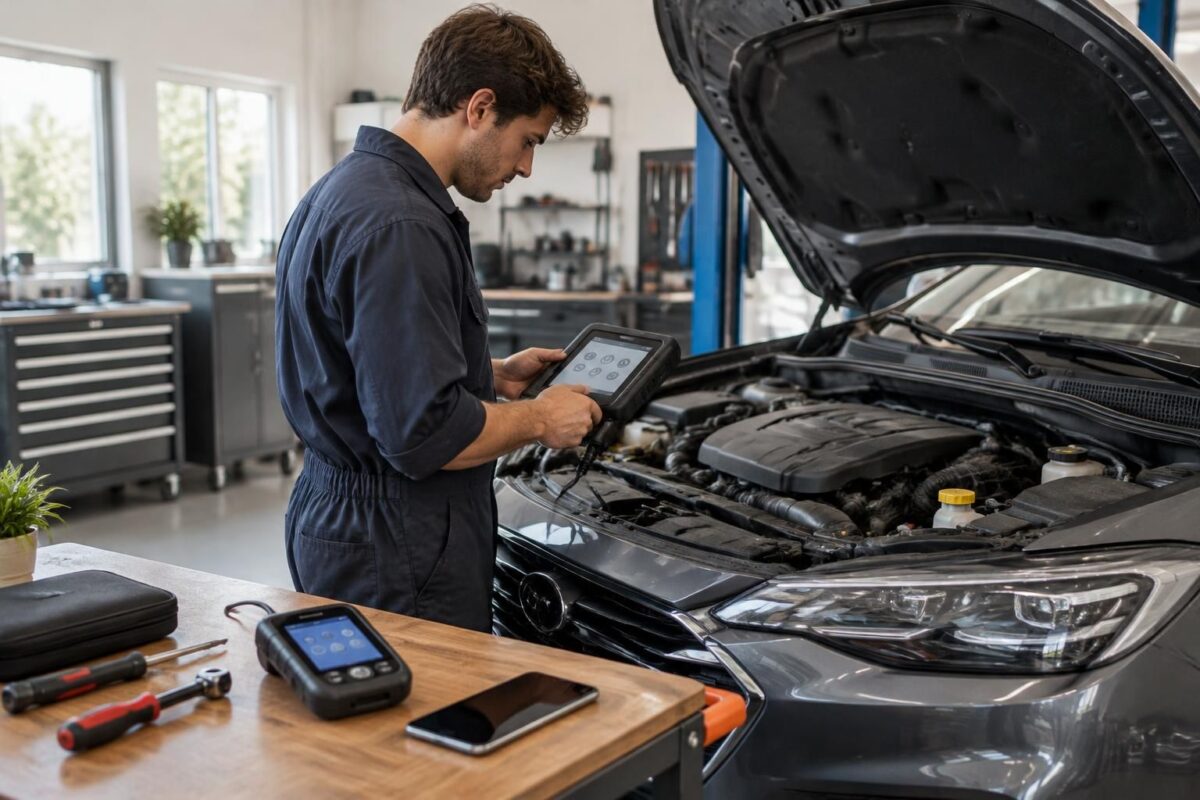
A Bluetooth OBD2 reader plugs into the diagnostic port and sends information to an app. It’s compact and often affordable, but how well it works depends on your phone and the quality of the app.
A standalone unit has its own screen. It’s convenient if you don’t want to install an app, while a more advanced model may offer live data and more features. In either case, capabilities vary depending on the car, so check compatibility before buying.
| Tool type | Main advantage | What to check |
|---|---|---|
| Bluetooth reader | Compact and controlled by phone | App and adapter compatibility |
| Unit with a screen | Direct readings, no smartphone needed | Features supported by the vehicle |
| Advanced scanner | More extensive diagnostic data and features | Whether it’s genuinely useful for your needs and budget |
A practical example of how to choose without wasting time
An engine warning light comes on in Lina’s car. With a basic reader, she reads the fault code and gets a lead to check before booking an appointment at the garage.
If she only wants to check engine faults, an entry-level model may be enough. To monitor live data or access other control modules, it’s best to check the advertised features carefully.
What a fault code reader can really do
A fault code reader helps identify the type of problem, such as an ignition or emissions system fault. The code gives you a lead, not a definitive diagnosis: the same warning can have several causes.
Clearing error codes and resetting the engine warning light won’t fix the problem. If the fault is still present, the light may come back on. Note the code and the circumstances before taking any action: this habit improves car diagnostics and helps you avoid losing useful information.
Three steps for using your OBD2 tool
- Plug in the reader with the engine off. The port is usually under the dashboard on the driver’s side. Then turn on the ignition according to the tool’s instructions.
- Start reading the faults. Note each code and check its description in the app or the vehicle documentation. Don’t replace a part based on the code alone.
- Decide what to do next. If the fault seems serious, the engine is running poorly, or the warning light is flashing, pull over somewhere safe and have the car checked. Only clear the code after you’ve saved the information and addressed the cause.
The right tool doesn’t promise to repair your car: it makes initial checks faster and more systematic. That’s where the real time savings in car maintenance come from.
Frequently asked questions about OBD2 tools for beginners
Does an OBD2 reader work on all cars?
No. The port and accessible features depend on the vehicle, its year, and its systems. Check the stated compatibility before buying.
Is a Bluetooth reader enough for a beginner?
Yes, if you want to read engine codes and use a compatible app. For advanced features or use without a phone, a standalone unit may be more suitable.
Can you clear a code as soon as it appears?
It’s best to note the code and look for the cause before clearing it. Removing the warning won’t fix the fault, and the light may come back on.
Does reading a code tell you which part to replace?
No. The code indicates a fault or an area to check, but there may be several causes. The reading needs to be followed up with appropriate checks.
I hope you’ve found these tips useful. See you soon! — Patrick