Car maintenance after a period of disuse: what to do beforehand
Hello, it’s Patrick. Before getting back on the road, check for leaks, inspect the battery, tires, brakes and fluid levels, then take a short test drive at low speed. After a long period of vehicle inactivity, a car may seem ready while concealing a flat tire or a damaged wire. Getting it back on the road gradually helps avoid unpleasant surprises. Safety comes first, not speed.
What to do immediately:
- Look under the car for a leak or an unusual puddle.
- Check the tires, their condition and their pressure when cold, according to the manufacturer’s specifications.
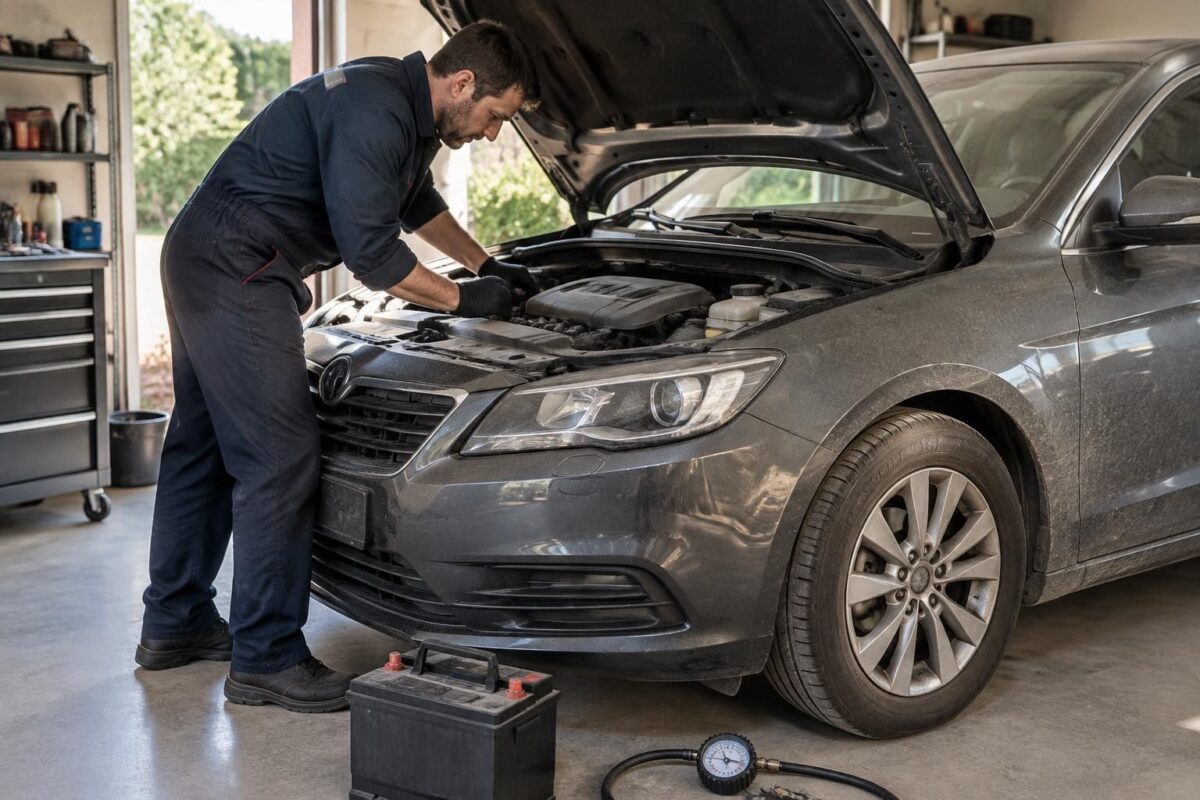
- Inspect the battery, terminals and engine compartment for corrosion or signs of rodents.
- Check the oil level, coolant and other accessible fluids.
- Test the brake pedal and lights before setting off.
To complete this initial check, consult a guide to checks before getting back on the road and these maintenance tips after a vehicle has been off the road.
Getting back on the road: checks to make before starting
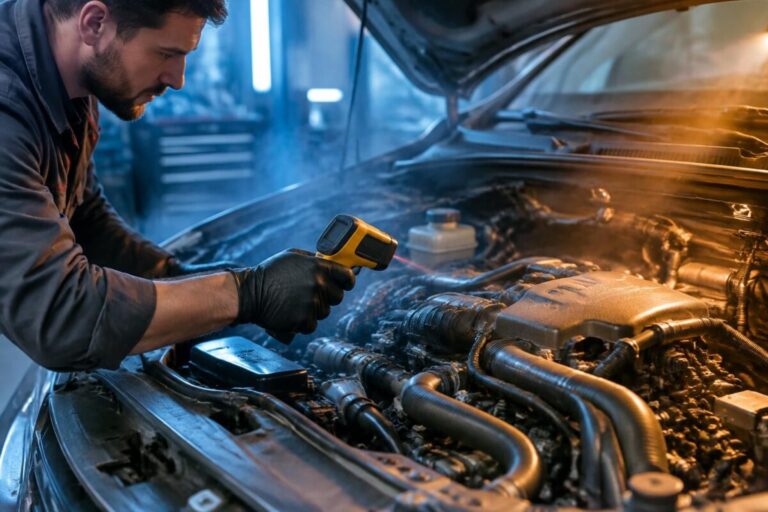
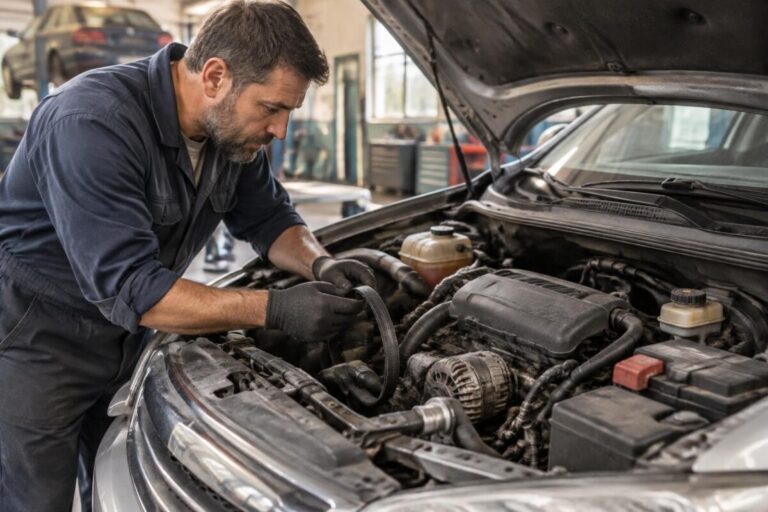
Start by inspecting the ground, hoses and visible belts. Under the hood, also look for leaves, a nest or chewed wires: an animal may settle there while the car is not being driven.
Next, check the car battery. If the engine turns over slowly, the terminals are corroded or the battery has been left discharged, have it tested or recharged before trying to start the car repeatedly.
Check the oil level and coolant when the engine is cold. Also check the brake fluid and windshield washer fluid as directed in the owner’s manual. This fluid check helps identify a low level or a leak before the engine heats up.
Checking the tires and brakes
Walk around all four wheels: any deformation, crack or sagging sidewall needs to be examined. Measure the pressure when the tires are cold and follow the value shown on the door-jamb label or in the owner’s manual, not the maximum pressure molded into the tire.
Press the brake pedal while the car is stationary. If it feels unusually soft or sinks too far, do not drive. A thin layer of rust on the discs may disappear after a few gentle applications of the brakes, but persistent noise, vibration or the car pulling to one side calls for a professional inspection.
If the car has been parked for a few weeks, focus on the battery charge, tires and visual checks. If it has been sitting for several months, also have the brakes and belts checked, and check how old the fuel is before taking a long trip.
| Item | What to check | When to request an inspection |
|---|---|---|
| Battery | Starting, charge and condition of the terminals | Slow starting or repeated need for a jump-start |
| Tires | Pressure, cracks, deformation and wear | Persistent vibration or visible damage |
| Brakes | Pedal response, noises and vibrations | Soft pedal, uneven braking or persistent noise |
| Fluids | Oil, coolant, brake fluid and windshield washer fluid | Low level or signs of a leak |
3-step procedure for getting back on the road
- Step 1 — inspect while stationary. Check the ground, tires, fluid levels, lights and the area around the engine. If you spot a major leak or a damaged wire, postpone starting the car.
- Step 2 — start without rushing. Start the car outdoors, never in a closed garage. Watch the warning lights and listen to the engine; switch off the ignition if a serious warning appears or an unusual noise persists.
- Step 3 — take a short test drive. Drive at low speed in a quiet area. Test the brakes gently, pay attention to the steering and any vibrations, then check the ground again after stopping.
This anecdote sums up why that last check matters: after several months in the garage, a car may start normally but leave a small trace of fluid the first time it is moved. “It’s better to spot a problem while stationary than to discover it in traffic.”
Avoid letting the engine run in an enclosed space: exhaust fumes are dangerous. To keep the air conditioning in good condition, use it occasionally outdoors and air out the cabin; to maintain the battery, a suitable maintenance charger may be preferable to repeated starts, depending on the model and situation.
Car maintenance: when to seek professional advice
If the car has been parked for a very long time, the fuel is old or a warning light stays on, have the vehicle inspected before taking an important trip. A professional can test the battery, examine the brakes and check for leaks that a visual inspection may not reveal.
These simple precautions make getting back on the road less stressful and contribute to road safety. The right approach: take it step by step and never ignore anything unusual.
Should you start the car every week while it is parked?
Not necessarily. Short starts at idle do not always recharge the battery properly. A suitable maintenance charger or the recommendations in the owner’s manual are often preferable, depending on the vehicle and how long it will be parked.
What tire pressure should you use after several months of inactivity?
Inflate the tires when cold to the pressure specified by the manufacturer, usually on the door-jamb label or in the owner’s manual. Do not automatically overinflate them.
Is a little rust on the brake discs cause for concern?
A thin surface layer may wear away after a few gentle applications of the brakes. If the noise, vibrations or loss of braking effectiveness persist, have the system checked before continuing.
Can you set off straight away on a long trip?
It is best to take a short test drive at low speed first, check the brakes and watch for warning lights, noises and vibrations. If anything seems abnormal, stop and have the car inspected.
Thanks for reading; best wishes, Patrick