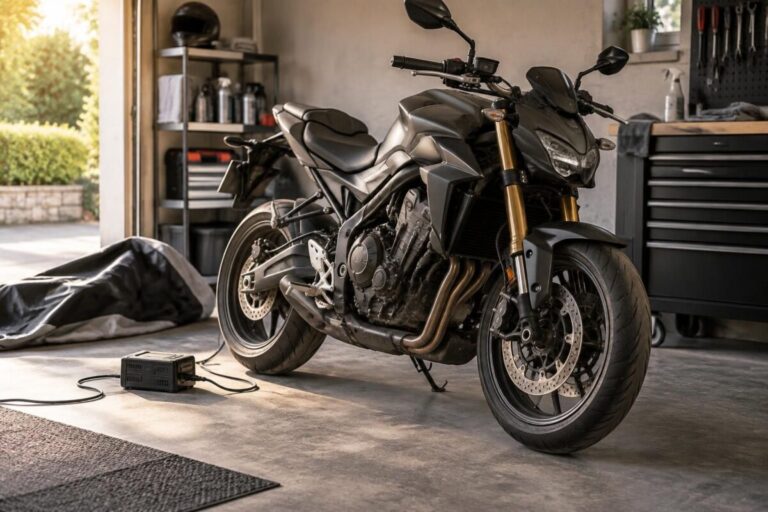

A Motorcycle That’s Rarely Used: Why Maintenance Still Matters
Hello, this is Patrick. Even a motorcycle that is rarely used still needs regular maintenance: follow the manufacturer’s schedule and check the battery, tires, brakes, and fluids at least once a year. Even in the garage, time ages certain components, and leaving the bike unused can encourage corrosion. A few simple steps are often enough to prevent a breakdown on your first ride. The goal is clear: preserve reliability without replacing parts unnecessarily.
Do this right away:
- Check the tire pressure when cold and inspect their condition.
- Test the motorcycle battery and recharge it with a suitable charger if necessary.
- Check the oil and brake fluid levels.
- Inspect the chain, brakes, lights, and any signs of leaks.
- Check the service log for overdue maintenance, even if the mileage is low.
A motorcycle that is rarely used doesn’t follow a mileage-only schedule: some maintenance tasks are also time-based. To prepare a bike that has been sitting in the garage for a long time, read these precautions to take after a long period of storage and this practical motorcycle maintenance guide.
Why a motorcycle that isn’t ridden much needs preventive maintenance
Riding infrequently reduces mileage-related wear, but not aging. Moisture can damage electrical contacts and metal parts, fuel can deteriorate depending on the system, and the battery gradually loses its charge.
Tires also age even when they aren’t being ridden on. Low pressure can persist for a long time without being visible to the naked eye, even though it affects handling from the very first turns. Preventive maintenance is therefore primarily about avoiding unpleasant surprises and preserving road safety.
Useful checks even with low mileage
Follow the intervals in the manual: whichever comes first, the mileage or time interval, determines when the task is due. An engine oil change may be required according to the manufacturer’s schedule, even if the motorcycle has been ridden very little; intervals vary by model and use.
| Component | Recommended check | Why it’s useful |
|---|---|---|
| Battery | Check the charge regularly while the motorcycle is stored | Reduce the risk of difficulty starting |
| Tires | Measure the pressure before riding and inspect the rubber | Maintain grip and spot cracks or deformation |
| Brake fluid | Follow the service schedule, often around every two years | Brake fluid absorbs moisture over time |
| Chain | Check the tension and lubricate as needed, depending on its condition | Limit wear and protect the drivetrain |
| Engine oil | Follow the manufacturer’s time-based or mileage-based schedule | Maintain proper lubrication |
These guidelines are general: the motorcycle’s manual always takes precedence. Brake fluid, for example, may need to be replaced based on a time interval, even if the motorcycle is ridden infrequently.
Motorcycle storage: protect the battery, tires, and components
Good motorcycle storage starts with a dry, well-ventilated space. Clean the motorcycle before storing it for an extended period, dry it thoroughly, and lubricate the chain: water and residue can accelerate corrosion.
A rider who only took his motorcycle out in spring would find the battery too weak every year. By keeping it on a suitable charger over the winter, he avoided several difficult starts. “A few minutes of checking today can often prevent a long breakdown tomorrow.”
If the motorcycle is going to sit unused for several weeks, remember to check the battery charge and tire pressure before riding again. If it hasn’t been ridden for months, also inspect the brakes, hoses, fluid levels, and fuel condition before the first ride.
A simple three-step procedure
- Step 1: Check the service log and note the tasks due based on the date or mileage.
- Step 2: Carry out visual checks and check the fluid levels, tires, battery, and lighting.
- Step 3: Have a professional handle any work that requires a special tool or involves the brakes or engine.
For a simple task such as cleaning or lubricating the chain, follow the proper procedure and use suitable products. If you’re unsure about a leak, a spongy brake, or an unusual noise, it’s best not to ride until the motorcycle has been inspected.
Regular maintenance also protects your budget
A well-maintained motorcycle doesn’t necessarily cost more: maintenance mainly helps identify problems early. A quick check can reveal a leak or a worn part before the repair becomes more extensive.
Record each service in the logbook or a spreadsheet: date, mileage, work carried out, and parts used. This history helps you keep track of maintenance intervals and reassures a buyer if you sell the motorcycle.
The principle is simple: low mileage doesn’t mean no maintenance. Regular checks, tailored to the model and how long it has been sitting unused, keep the motorcycle ready to ride and reduce risks when setting off.
Do you need to change the oil if the motorcycle is ridden very little?
It depends on the model and the manufacturer’s recommendations. Follow the mileage-based or time-based interval, whichever comes first.
How can you prevent the battery from discharging during storage?
Check its charge and, if necessary, use a trickle charger that is compatible with the battery and motorcycle.
How often should you check tire pressure?
Check it when the tires are cold before riding again after a break, and regularly during periods of use. The correct pressure is listed in the manual or on the motorcycle.
Can a motorcycle that has been sitting unused for a long time be ridden straight away?
Before riding, check the tires, brakes, fluid levels, battery, lights, and for any leaks. If anything seems abnormal, have the motorcycle inspected.
Thanks for reading; best wishes, Patrick