
Car before a long trip: check when hot or cold
Hi, it’s Patrick. Before a long trip, do most checks when the car is cold, parked on level ground and with the engine off; always check the coolant when cold. Measure tire pressure before driving, while hot checks require precautions, especially for the oil and brakes. A few simple steps improve your road safety and help prevent unpleasant surprises along the way.
Do immediately:
- Park the car on a level surface and let the engine cool down.
- Measure tire pressure before setting off, following the manufacturer’s recommended values.
- Check the engine oil using the method described in the manual.
- Check the coolant level when cold.
- Test the lights, windshield wipers and brakes before loading the car.
To complete this check, see these tips on checking the oil when hot or cold and this list of things to check before a long drive.
Cold or hot checks: which method should you use?
For tires, the cold check is the right method: measure the pressure before driving or after the car has been parked for about two hours. Heat raises the pressure reading, so don’t deflate a tire just because you’ve recently been driving.
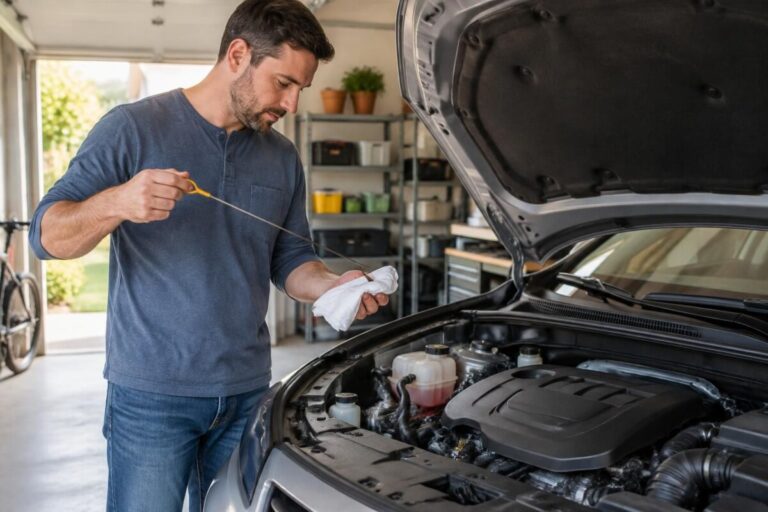
For engine oil, park on level ground, switch off the engine and follow the manufacturer’s instructions. Depending on the model, check the level when the engine is cold or after waiting a few minutes: remove the dipstick, wipe it clean, insert it fully again, then check that the oil is between the minimum and maximum marks.
Check the coolant only when the engine is cold. Never open the cap on a hot system: pressure can cause hot coolant to spray out. A low level also calls for checking the cause, not just topping it up.
A hot check is therefore not a general rule. Some vehicles have a specific procedure that calls for checking after running the engine; the manual is always the reference.
The three-step procedure before setting off
- Step 1: park on level ground, switch off the engine and wait for it to cool before opening the hood. Get a cloth ready and check the manufacturer’s instructions.
- Step 2: check the oil and coolant, then inspect the tires: pressure, wear, cuts or bulges. Also check the spare tire if your car has one.
- Step 3: test the brakes, lights and windshield wipers. If a warning light comes on, a leak appears or the brake pedal feels unusual, have the vehicle checked before setting off.
Here’s a telling anecdote: a driver discovers a severely underinflated tire just before loading the luggage. It takes only a few minutes to correct at a gas station, instead of turning the journey into an unexpected stop.
“Better to check in the driveway than make repairs on the roadside.” This routine doesn’t replace the maintenance schedule in your service book, but it can help you spot an obvious problem before it gets worse.
Two situations to remember
If you’ve driven recently, wait before measuring tire pressure and don’t let air out when the tires are hot. If the engine is hot, let it cool completely before checking the coolant.
Other things to check before a long trip
Getting a car ready to go involves more than checking fluid levels. Look at the tire tread wear indicators: the legal minimum is 1.6 mm, but a greater margin, around 3 mm, is often preferable, depending on the tire and driving conditions.
The brake pedal should offer consistent resistance. An unusual noise, vibration or soft pedal calls for a professional inspection; a long trip with a loaded car is no time to take that risk.
- Check the low beams, turn signals, brake lights and reversing lights.
- Fill the windshield washer reservoir and replace any wiper blades that leave streaks.
- Inspect the battery terminals and watch for any unusual warning lights.
- Place heavy luggage close to the backrest of the rear seat and secure it properly.
- Keep the necessary documents and safety equipment within easy reach.
An old battery, a belt that is nearing its replacement date or overdue maintenance deserve attention before setting off. If in doubt, a garage can carry out a preventive inspection: a problem spotted early is often easier to address.
| Item | When to check | Practical guide |
|---|---|---|
| Tire pressure | When cold | Follow the vehicle label or manual |
| Engine oil | Engine off, following the manufacturer’s procedure | Level between the dipstick marks |
| Coolant | Engine cold | Never open the system when hot |
| Brakes and lights | Before setting off | Address any problem before driving |
| Windshield wipers and washer fluid | Before setting off | Ensure clear visibility |
On the road, take regular breaks, for example every two hours, and keep an eye on the warning lights. If an important warning appears, stop in a safe place and consult the manual rather than continuing without understanding the problem.
Frequently asked questions about checking your car
Should you check engine oil when cold or hot?
It depends on the model. Park on level ground and switch off the engine, then follow the procedure in the manual: some vehicles require you to wait a few minutes after switching off the engine, while others specify a cold check.
Can you check tire pressure after driving?
The reading will be affected by heat. If possible, wait about two hours, and don’t deflate a hot tire to bring it down to the value specified for cold tires.
Why check the coolant when the engine is cold?
The system may be pressurized when the engine is hot. Opening the cap risks hot coolant spraying out.
What should you do if a fluid level is too low before setting off?
Top it up with the appropriate fluid, following the manufacturer’s recommendations. If the level drops again, there is a leak or a warning light comes on, have the vehicle diagnosed before the trip.
Thanks for reading; best wishes, Patrick