Deep Scratch Tools: Which Ones Save Time
Hello, it’s Patrick. To save time, choose your tool based on the depth: polish or a dual-action polisher for the clear coat, touch-up paint or a body shop if the scratch has reached the primer or metal. The right diagnosis avoids unnecessary purchases and actions that could further damage the paint. A deep-scratch remover cannot recreate a missing layer of paint.
Do this right away:
- Wash the area and dry it with a clean microfiber cloth.
- Gently run your fingernail across the scratch to assess its depth.
- Look at the mark in the shade, then under a bright light.
- Get several clean cloths and a pad suited to the product ready.
- Avoid sanding if the scratch has reached the primer or exposed the metal.
To compare repair options, see these tips on the steps for treating a deep scratch and the guidance on choosing a progressive scratch-removal system.
Tools for deep scratches: choose based on the damage
The fingernail test gives you an initial indication: if your nail catches, the scratch has probably gone through the clear coat. If the mark looks white or reveals another color, it may have reached the paint or primer. In these cases, polishing alone will generally not be enough.
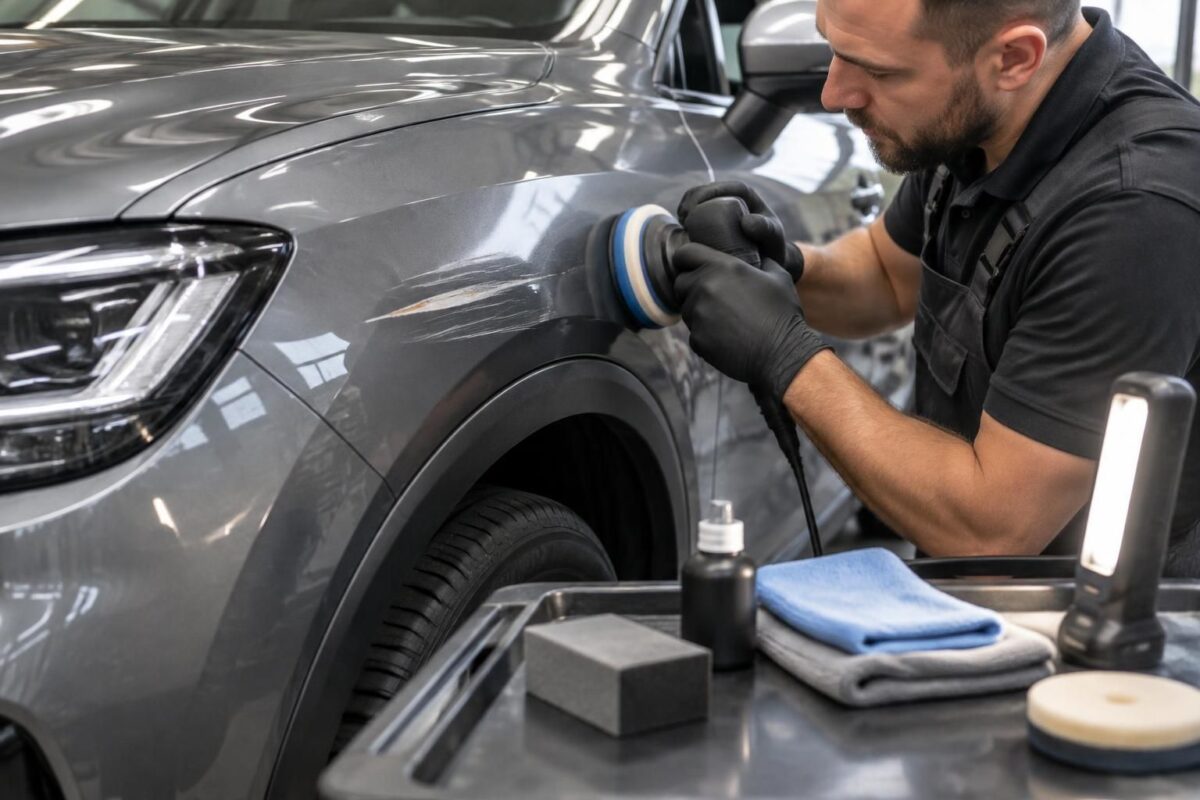
Light scratches often respond well to a finishing polish. For a medium scratch, a polishing compound can reduce the defect, followed by a finer product to restore the shine. A scratch that reaches the metal calls for suitable touch-up paint or professional attention: using a machine on it repeatedly risks removing too much clear coat.
“The right tool is first and foremost the one that preserves the remaining paint.” This principle helps you avoid pursuing complete removal at the cost of weakening the surface.
Which tool saves time?
| Tool or product | Best suited for | What to watch out for |
|---|---|---|
| Dual-action polisher | Large areas and defects in the clear coat | Use a suitable pad and keep the machine moving |
| Compound and polish | Light to medium scratches | Start with the least abrasive product |
| Touch-up pen or paint | A scratch that has reached the paint layer | Choose a shade that matches the vehicle’s paint code |
| Abrasive paper | Very localized preparation, with experience | Too coarse a grit can cut through the clear coat |
| Bodywork repair kit | Small touch-ups with all the accessories included | Check that it is compatible with the finish and scratch depth |
A dual-action polisher provides more consistent correction over a fairly large area. For a small, precise touch-up, working by hand gives you more control, although it takes more effort. A random orbital sander is no harmless shortcut: it is designed to abrade surfaces and can quickly damage paint layers if used incorrectly.
Quick three-step process
- Clean and assess. Work on a cool body panel, out of direct sunlight. If your fingernail catches noticeably or the metal is visible, stop polishing and plan for a proper paint repair.
- Correct gradually. If the mark is limited to the clear coat, apply a small amount of product to a pad. Make moderate passes without lingering on edges, then wipe with a clean microfiber cloth.
- Check and protect. Inspect the result from several angles. Stop when the scratch has been reduced enough, then apply wax or a sealant according to the product instructions.
For automotive sanding, use abrasive paper only if the method is appropriate for the damage and you know how to use it. A complete kit can save time by bringing together pads, wipes and a cloth, but claims of correction “without sanding” mainly apply to superficial defects. Choosing the right product matters less than making the right diagnosis.
Two quick cases based on scratch depth
If it’s a scratch you can barely feel with your fingernail, start with a finishing polish and move on to compound only if needed. If it’s a scratch that catches your nail clearly or reveals the primer, avoid using a polisher and opt for suitable touch-up paint or a body shop.
One driver had tried to remove a mark on an edge by rubbing the same spot for a long time: the clear coat became dull around the scratch. A few test passes on an inconspicuous area and lighter pressure would have avoided this extra repair.
Mistakes that waste time
Working in direct sunlight or on a hot body panel makes products dry too quickly and makes them harder to wipe off. Using too much product also leaves residue that is difficult to remove. It’s better to work on a small area with a clean pad, and apply more product only if the results warrant it.
Avoid mixing abrasives from one step to the next: wipe off each product before continuing, and change microfiber cloths if they become loaded with product. A dual-action polisher speeds up the work, but it does not replace caution or regular checks of the result.
Which kit should you choose for a DIY paint repair?
For a light scuff, a correction product and a soft cloth may be enough. For a more visible mark, choose a bodywork repair kit with clearly explained steps and accessories suited to your car’s finish. A single paste is convenient for a small touch-up; a complete kit makes it easier for a beginner to stay organized.
Check the instructions for clear-coated, matte or metallic paint before applying the product. Products that advertise UV protection or a water-repellent effect can help preserve the finished appearance, but they are no substitute for touch-up paint if the color layer has been damaged. With a deep scratch, the time savings come mainly from making the right choice from the outset.
Which tool should I use for a scratch that catches my fingernail?
The test suggests that the scratch has gone through the clear coat. Compound may sometimes reduce it, but if the paint or primer has been damaged, you need suitable touch-up paint rather than aggressive polishing.
Will a dual-action polisher remove all deep scratches?
No. It mainly corrects defects in the clear coat. It cannot replace missing paint or repair a scratch that reaches the metal.
Should I use a random orbital sander to repair the bodywork?
Not as a quick fix for an isolated scratch. A random orbital sander can remove too much material; localized sanding requires a suitable abrasive and a steady hand.
Thanks for reading; best wishes, Patrick