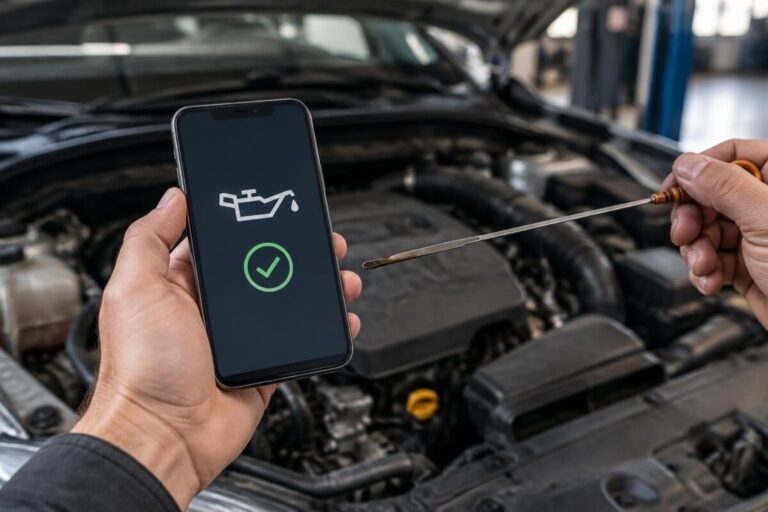

Tools and battery: how to tell if it’s dead
Hi, it’s Patrick. To find out if your battery is deadSimply check its voltage with a multimeter and monitor for classic signs such as a difficult start or headlights that are dimming.
A battery problem can happen anywhere, and often unexpectedly. It’s one of the most frequent breakdowns, accounting for nearly 40% of car breakdowns, according to a recognized study. electrical systems of your car or your power tool They may suffer from it. So it’s best to act quickly and know how to diagnose and anticipate these problems. Understanding battery diagnostics is essential. To learn more about thebattery maintenanceAlso, check out this other practical guide .
To do immediately:
- of the battery with a multimeter at rest.
- Observe the boot quality and the behavior of the headlights.
- Visually check the condition of the terminals and cables, clean if necessary.
- Perform a battery recharge slow if voltage is too low.
- If doubt persists, arrange for a professional aptitude test.
Recognizing the signs of a dead or failing battery
The first sign is often a The engine struggles to start, especially in winter. The headlights become less bright and the horn loses power. Sometimes, you might see a battery warning light on the dashboard. This indicates a problem, often related to either the battery or the alternator. Incorrect voltage, typically below , suggests a battery in poor condition.
dischargedA proper recharge may be enough to restore the usual battery life. However, if the battery struggles to hold a charge, it is probably a problem. dead battery to replace.
Another tip is to listen to the starter: if it makes clicking noises without the engine turning over, or strange noises, this may indicate a problem with the battery or the electric starter.
- Turn the car off completely
- Using a voltmeter, measure the voltage across the terminals: 12.7V indicates a good condition. between 12.3 and 12.6V is acceptable, but below 11.5V This is critical.
- Visually inspect the terminals: corrosion, oxidation, loose cables are enemies to be eliminated quickly.
Suitable tools for reliable battery testing and maintenance
reliable multimeter is the key to a battery diagnosis efficient. It allows you to test the voltage and quickly check if your battery is holding its charge. A smart charger is also a valuable tool for the battery charge slow and safe, especially with modern EFB or AGM batteries.
Here is a summary table of the tensions interpreted:
| Voltage (Volts) | Meaning |
|---|---|
| 12.7 | Optimal condition, fully charged battery |
| 12.3 – 12.6 | Acceptable condition, still sufficient charge for daily use |
| 11.5 – 12.2 | |
| Battery is very discharged or dead, needs replacing |
Beyond voltage, a professional current or capacity test (CCA test) can determine the battery’s true condition. A voltmeter alone does not eliminate all uncertainty.
When to recharge and when to change your battery?
A dead battery It no longer holds a charge, even after recharging. Its average lifespan is 4 to 5 years depending on your usage and weather conditions. If starting remains difficult or the battery drains quickly again, you should consider the .
For recharging, a smart charger compatible with your battery technology is essential. Expect to pay approximately 6 to 8 hours for a standard 60Ah battery.
Warning signs to watch out for:
- Engine difficult to start for several days in a row.
- Abnormal noises or physical signs on the battery (swelling, severe corrosion).
- Rapid loss of battery life even after a full charge.
- Battery light permanently on.
Preventive replacement avoids many unexpected breakdowns.. »
Maintaining your battery to maximize its lifespan
L’battery maintenance It’s easy to do. Regularly cleaning the contacts, checking the charge, and avoiding deep discharges make a big difference. A trickle charger is recommended, especially if you don’t use your car much or if your vehicle is parked for part of the year.
Environmental conditions also impact battery life: avoid extreme temperatures and store your vehicle in a temperate location if possible. In winter, a weak battery will struggle to start, so vigilance is key.
Here are some practical tips:
- Check the tension every 4 to 6 weeks in winter.
- Clean the terminals with a bicarbonate-based paste to remove corrosion.
- Avoid very short trips that do not sufficiently recharge the battery.
- Use a smart charger to maintain optimal charge.
- Disconnect the battery if the vehicle will not be used for a long time.
As an old mechanic used to say: “A well-maintained battery guarantees peace of mind.”
Don’t neglect thealternatorThe alternator recharges the battery once the engine is running. A faulty alternator can also cause a dead battery because it no longer recharges. The voltage measured at idle should be between 13.8 and 14.8 volts.
THE starter It can also suffer from wear and tear: repeated clicking noises or a struggling engine can indicate a mechanical problem that unnecessarily drains the battery.
Finally, a parasitic consumption An invisible component can drain your battery when the vehicle is off. An isolation test of electrical components will then allow you to detect a faulty circuit.
How can you tell if a battery is dead or simply discharged?
A discharged battery temporarily lacks power and can be revived after recharging. A dead battery has lost its ability to hold a charge even after recharging and requires replacement.
What are the signs that indicate a failing battery?
Difficult starting, dim headlights, battery light on, swollen battery or significant corrosion are common signs.
How to perform a simple battery test at home?
Use a multimeter to measure the voltage across the battery terminals at rest. A voltage below 12.3 volts indicates a discharge or a problem.
When should you replace your battery?
Generally, after 4 to 5 years or when the battery no longer holds a charge despite a full recharge.
What should I do if the car won’t start despite being recharged?
Check the condition of the alternator, starter and look for any parasitic current draw before changing the battery.
Thanks for reading; best regards, Patrick