First Car on a Tight Budget: Where to Cut Without Trapping Yourself
Hi, this is Patrick. For your first car on a tight budget, go for a smaller size, fewer options and a less prestigious model—never skimp on insurance, preventive maintenance or safety equipment. The sticker price doesn’t tell you how much the car will cost once you’re on the road. So before buying a car, check the total budget: purchase price, car insurance, fuel and possible repairs.
Things to do now
- Set a maximum budget and keep some money aside for unexpected repairs.
- Get an insurance quote before choosing a model.
- Choose a common small petrol car with parts that are easy to find.
- Ask for maintenance records and a roadworthiness test certificate before making the trip.
- Plan a test drive and, if possible, an independent mechanical inspection.
A good deal isn’t necessarily the cheapest car: it’s one with predictable maintenance costs that suits your journeys. To set your budget, check out this guide to the criteria for a successful first car purchase and these tips on how to spot a risky used car.
Where to cut your car budget without sacrificing the essentials
The classic pitfall is spending all your savings on the purchase price, then discovering you have nothing left for insurance, tires or a service. As a rule of thumb, try to keep all your car-related expenses — any loan payments, insurance, fuel and maintenance — to around 15% of your monthly take-home income, or less if your budget is already tight.
This threshold is a budgeting guideline, not a universal rule. If the car requires a large loan or an insurance premium that’s difficult to pay, lower your purchase budget or put off the decision: an affordable monthly payment isn’t enough if the other costs keep adding up.
Cut back on options and size, not safety
A basic city car can cost less to buy, insure and maintain than an SUV or a powerful sedan. If most of your journeys are in town, a well-maintained used small petrol car may do the job without making you pay for a large trunk or features you’ll rarely use.
On the other hand, don’t skimp on brakes, tires, airbags or stability control. An affordable car must also suit your journeys: if you often drive on the highway, check its comfort and handling before choosing it solely for its low price.
Compare the real costs before you get attached to a model
Car insurance costs vary depending on the vehicle, your profile, where you live and the coverage you choose. A low-powered car may be cheaper to insure, but only a quote obtained before viewing the car can confirm that for your situation. For a low-value car, third-party coverage may be worth considering; still, compare the coverage and deductibles.
Also look at fuel consumption and the cost of common parts. A widely sold model is often easier to repair than a rare or very well-equipped version. Diesel may suit some high-mileage drivers, but for short trips, potential maintenance costs and local driving restrictions are worth taking into account.
| Expense | Where to save | What’s best to avoid |
|---|---|---|
| Purchase price | Choose a smaller car category and compare several listings. | Spending all your savings without keeping money in reserve. |
| Insurance | Get several quotes and compare deductibles and coverage. | Choosing a model before checking its insurance cost. |
| Maintenance | Prioritize a clear service history and readily available parts. | Buying a car without invoices or an explanation of upcoming repairs. |
| Equipment | Stick to options that are genuinely useful. | Cutting costs on tires, brakes or safety features. |
| Fuel | Choose an engine suited to your usual journeys. | Relying only on the advertised fuel consumption without considering how you’ll use the car. |
Used cars: spot hidden costs before you sign
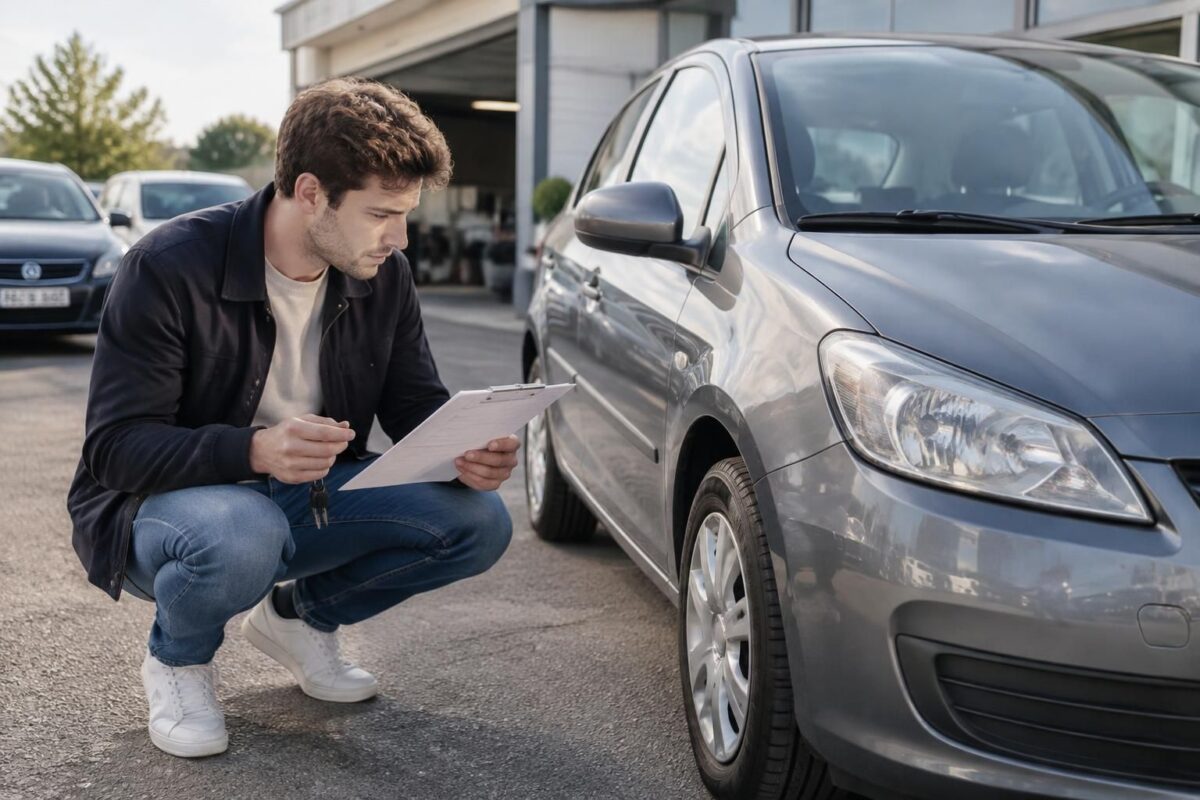
A car advertised at a low price may soon need new tires, a battery, a service or brake work. Ask the seller what has been replaced recently and what still needs doing, then check their answers against the invoices. A valid roadworthiness test certificate doesn’t replace a full inspection of the vehicle’s condition.
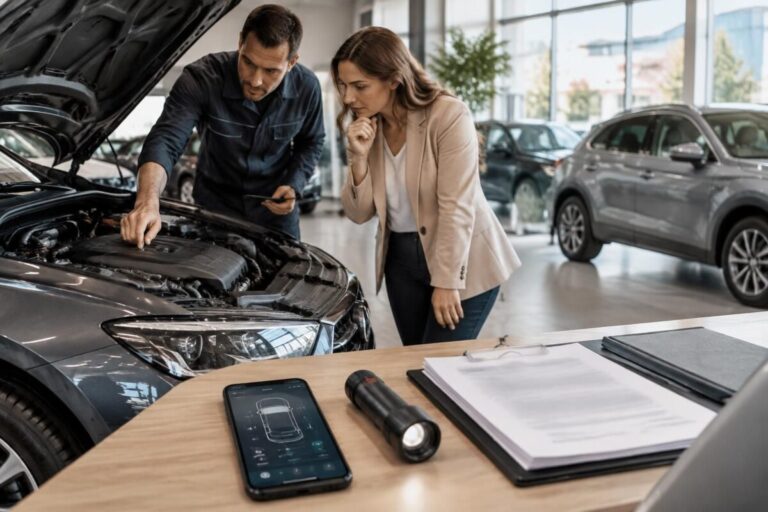
During the viewing, check the tire wear, signs of corrosion and any leaks. When starting the engine cold, persistent smoke or an unusual noise should prompt you to seek a professional opinion. Also check that the lights, windows, air conditioning and safety equipment work.
A test drive rounds out the mechanical inspection. Test the brakes, gear changes and how well the car holds the road on a varied route, without letting the seller rush you. If you don’t feel able to assess the car, the cost of a professional inspection may help you avoid a much more expensive repair.
A three-step approach to buying without going over budget
- Calculate your total budget. Add up the purchase price, registration, insurance, fuel and predictable maintenance. Set some money aside rather than spending every euro on the car listing.
- Filter listings based on how you’ll use the car. Shortlist a few common models suited to your journeys and insurance budget. Compare their condition, history and fuel consumption, not just their mileage.
- Check everything before committing. Review the documents, inspect the car with a cold engine, take it for a test drive and get a mechanical opinion if needed. Don’t sign until the required repairs and their costs are clear.
Example: Lina has €4,500 available and finds a car listed at that price. By negotiating for a less-equipped city car at €3,700, she keeps some money for insurance, the first service and a possible tire replacement. She gets less comfort, but avoids starting out with an already exhausted budget.
Questions to ask yourself before buying your first car
How much should I set aside after buying the car?
Keep an amount that suits your budget in reserve to cover a service, tires or an unexpected repair. The amount depends on the car’s condition and history: get estimates for any potential work before signing.
Is an older car necessarily cheaper?
Not necessarily. Its purchase price may be low, but wear, repairs and insurance can increase its total cost. A detailed maintenance history often matters more than age alone.
Should I choose third-party insurance?
This type of policy may suit a low-value car, but compare the coverage, deductibles and the consequences of an accident. Get quotes before buying and accurately declare the regular drivers.
Is a roadworthiness test enough to buy with confidence?
No. It provides information about certain defects, but it doesn’t replace checking the invoices or taking the car for a test drive. If a used car seems questionable, ask for an independent mechanical inspection.
Thanks for reading! Feel free to share your thoughts in the comments. — Patrick