
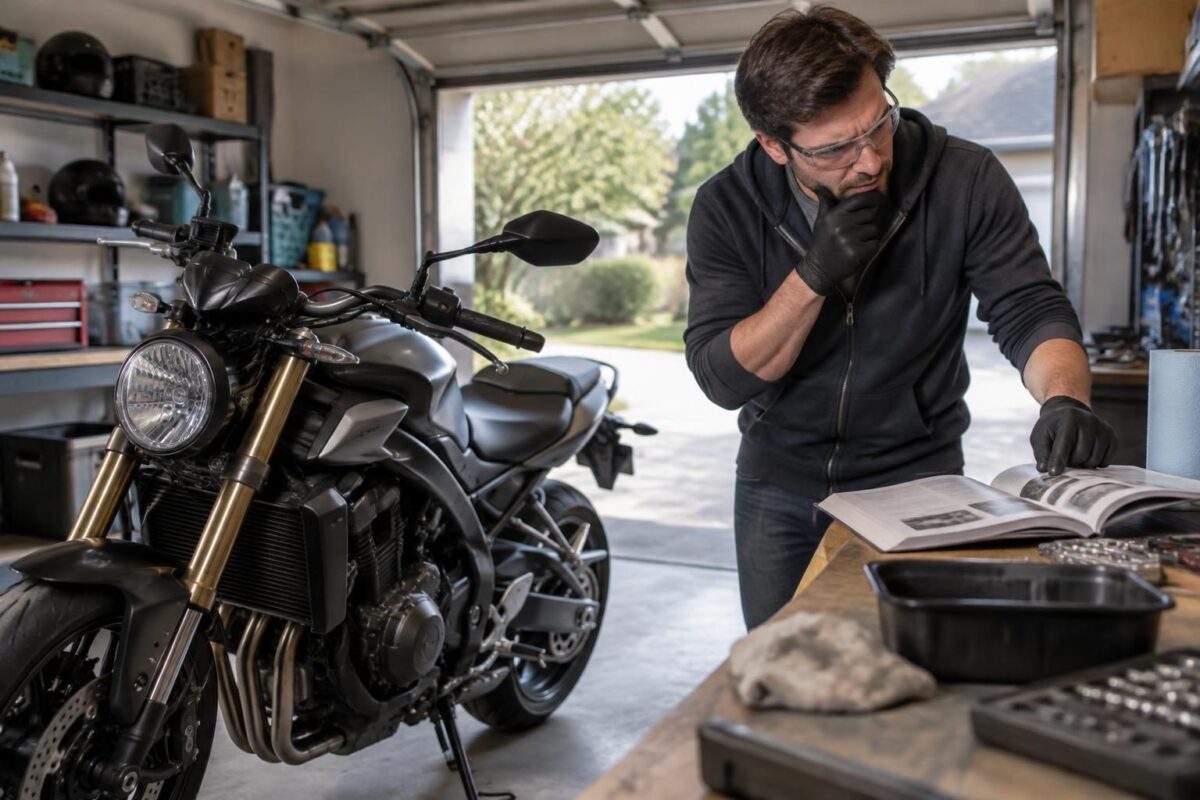
Motorcycle Maintenance at Home: Good Idea or Beginner’s Mistake?
Hello, Patrick here.
Motorcycle maintenance at home is a good idea for simple tasks, provided you follow the manufacturer’s instructions and leave sensitive operations to a professional.
You can save money on some tasks and get to know your machine better. The right approach is to start small, with a stable workspace and your motorcycle manual close at hand.
Things to do right away
- Check the manual for maintenance intervals and torque specifications.
- Check tire pressure when the tires are cold, using a reliable pressure gauge.
- Check the chain’s tension and condition before cleaning and lubricating it.
- Prepare a level surface, good lighting, and suitable motorcycle tools.
- Leave tires, valves, and electronic diagnostics to a motorcycle repair shop.
To distinguish routine checks from periodic servicing, see this reminder of the things beginners often overlook and this guide to a simple check to do before taking your bike to a repair shop.
Motorcycle maintenance at home: start with accessible tasks
Basic motorcycle maintenance doesn’t necessarily require a lot of experience. Checking the tires, lubricating the chain, and monitoring fluid levels are simple tasks, but they directly contribute to mechanical safety and your motorcycle’s longevity.
An oil change is also an option if you have the necessary equipment and follow the manufacturer’s procedure. Use the correct oil, replace the filter when specified in the maintenance schedule, then check for leaks before getting back on the road.
Successful beginner maintenance depends less on strength than on having a method. A torque wrench, the right wrenches, a drain pan, and a stable stand let you work cleanly; never get under a motorcycle that is precariously supported.
Savings and limits of motorcycle maintenance at home
Doing some tasks yourself can reduce the bill, but the savings vary depending on the model, parts, and local rates. An oil change or chain lubrication can save you some labor costs, while the initial cost of tools should also be factored in.
As a rough guide, changing the oil at home can save around €80 to €150 in labor and service costs, depending on the motorcycle and the shop. These amounts are not guaranteed: compare the cost of parts, oil, and consumables before deciding.
| Task | Recommended skill level | What to watch out for |
|---|---|---|
| Tire pressure and visual inspection | Beginner | Follow the values in the manual and check when cold |
| Cleaning and lubricating the chain | Beginner | Avoid contact with the wheel and tire |
| Oil and filter change | Careful beginner | Use the specified parts and torque settings |
| Valve adjustment or electronic diagnostics | Professional | Requires specific equipment and expertise |
| Tire installation and brake work | Professional recommended | A mistake can compromise safety |
The trap is confusing routine maintenance with a complex motorcycle repair. Replacing an easily accessible spark plug doesn’t carry the same level of risk as removing a caliper, working on a fork, or tracking down an electronic fault.
If you’re a beginner, take it one step at a time
Take Samir, for example, who wants to maintain his motorcycle in his garage. He starts by checking the tires and chain, then records the date and mileage; this routine helps him spot a change before it turns into a breakdown.
However, if a brake feels spongy, a leak appears, or the engine makes an unusual noise, stop working on it. Being cautious isn’t an admission of failure: it’s a decision that protects both the rider and the machine.
- Identify the task. Check the manual, required parts, and necessary tools before taking anything apart.
- Work in good conditions. Stabilize the motorcycle, protect the floor, and follow the specified torque settings.
- Check your work. Check the fluid levels and fasteners, and make sure there are no leaks; if in doubt, have a professional inspect the motorcycle.
Also keep receipts for the parts and oil you use. For any work involving the brakes, tires, or a safety-critical component, ask a mechanic for advice if you don’t have the necessary experience.
When to choose a motorcycle repair shop instead of DIY
Valve adjustment, fork seal replacement, tire installation, and electronic diagnostics often require specialized tools. A motorcycle repair shop has the equipment and expertise to carry out this work and check the results.
DIY has its place, but not at any cost. The best motorcycle advice comes down to one simple rule: do what you can check yourself, and leave anything that could put your safety at risk to a professional.
Frequently asked questions about motorcycle maintenance at home
Does maintenance performed at home void the warranty?
Not automatically. Follow the manufacturer’s maintenance schedule, use compliant parts and fluids, and keep your records. If in doubt about a repair, ask the manufacturer or an authorized repairer for confirmation.
What tools do I need to get started?
At a minimum, have the right wrenches, a torque wrench, a pressure gauge, an oil drain pan, and a stable way to support the motorcycle. The exact equipment depends on the model and the work planned.
Which tasks are best left to a professional?
Tire installation, valve adjustment, complex brake work, fork seals, and electronic diagnostics should generally be left to a qualified mechanic.
Do I need to report routine maintenance to my insurer?
Routine maintenance generally does not need to be reported. However, a major modification to the motorcycle may need to be reported to your insurer: check the terms of your policy before making it.
Thanks for reading! Feel free to share your thoughts in the comments. — Patrick