
Car or Motorcycle Immobilized: Which Suffers More?
Hello, it’s Patrick. In general, a motorcycle that’s off the road tends to cause its rider more day-to-day hardship, because it offers less protection and fewer transportation options; a car that’s off the road is more likely to affect a family or a professional activity. The most effective approach is to check the reason, resolve the issue quickly, and arrange alternative transportation. However, the cost of repairs, how long the vehicle is out of service, and everyone’s needs all make a difference.
What to do immediately:
- Read the document issued by law enforcement and identify the specific reason.
- Check whether the vehicle has been immobilized at the scene or has already been taken to an impound lot.
- Don’t drive again until the restriction has been lifted or the necessary repairs have been made.
- Notify your vehicle insurer and ask which procedures they can handle.
- Arrange alternative transportation to minimize the impact on your daily life.
To understand the official procedures, consult the Service-Public page on vehicle immobilization. To reduce the risk of a car breakdown, also check out these preventive tips before a repair that takes your car off the road.
Car immobilized or motorcycle immobilized: different challenges
A motorcycle breakdown means greater exposure to the elements and often makes it harder to carry a passenger or luggage. If you commute to work, even a few days without your two-wheeler can quickly disrupt your schedule and routine.
A car offers better protection from rain and cold, but being without it can have a greater impact if you rely on it for family trips, errands, or work. Roadside assistance and repair costs depend mainly on the breakdown, the model, and the distance to the garage.
“The right thing to do is address the cause before thinking about getting back on the road.” A quick check of the dashboard warning lights, tires, and battery can sometimes help identify the problem, but it’s no substitute for a professional diagnosis.
Two situations, two ways to plan
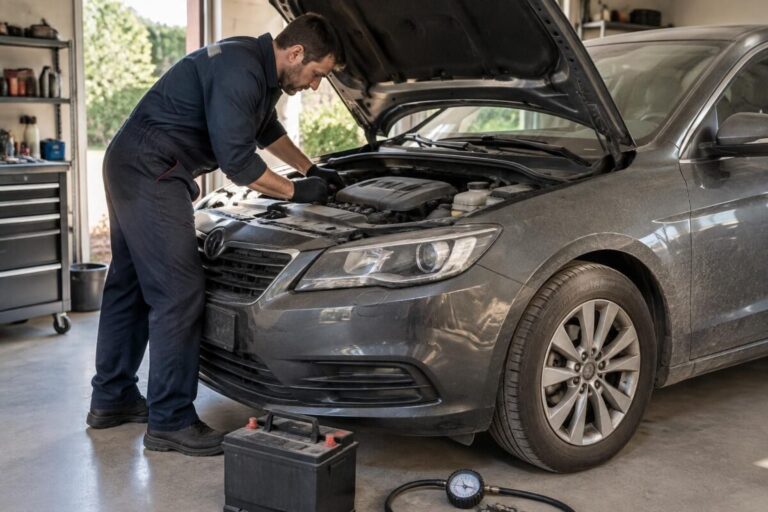
If it’s a car that’s off the road and you use it for family trips, first arrange essential journeys and ask for an estimate before authorizing any repairs.
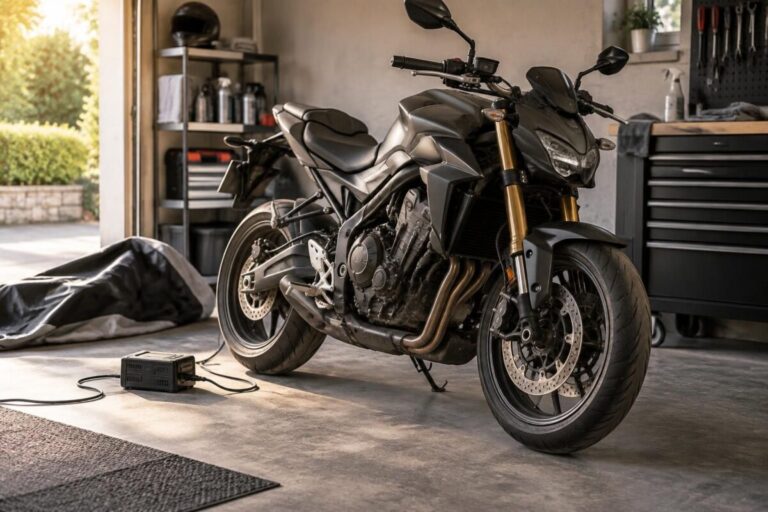
If it’s a motorcycle that’s off the road, secure the bike and check whether your insurance or roadside assistance covers a repair service or towing.
| Situation | Main concern | Helpful step |
|---|---|---|
| Car immobilized | Family trips, work, and repair costs | Compare the estimate and arrange a replacement option |
| Motorcycle immobilized | Exposure to the elements and reliance on a two-wheeler | Protect the vehicle and contact roadside assistance |
| Immobilization ordered during a traffic stop | Steps to resolve the issue and the risk of impoundment | Follow the instructions given by law enforcement |
Administrative immobilization or breakdown: know the difference
A breakdown immobilizes a vehicle because it can no longer be driven safely or without repairs. Administrative immobilization, on the other hand, means you cannot drive away until the reported issue has been resolved. The procedures are therefore different, even though both situations limit your mobility.
Immobilization, impoundment, and confiscation are also different. The first temporarily prevents the vehicle from being used; impoundment removes and holds it; confiscation may be ordered by a judge and results in a permanent transfer of ownership.
The reasons may include issues with insurance, the roadworthiness test, the vehicle’s condition, or a serious offense. If there are several reasons, each one must be addressed before the restriction can be fully lifted.
Since April 1, 2024, the green insurance card has no longer been used for vehicles registered in France: law enforcement checks insurance in the Insured Vehicles File. If you’ve recently taken out a policy, keep your Insured Vehicle Memo handy, as it may take a little while for the file to be updated.
For driving without insurance, the fixed fine can be as high as €500, with a surcharge payable to the FGAO bringing the total to €750 in a standard case. The amount depends on the circumstances and payment deadline; causing an accident while uninsured can also lead to much more serious financial consequences.
Three steps to get back on the road without making things worse
- Step 1: identify the reason. Reread the report or notice you were given, then check whether the vehicle is at the scene or in an impound lot. If anything is unclear, contact the service listed on the document.
- Step 2: resolve the issue and gather your documents. Depending on the situation, take out insurance, get a roadworthiness test, or arrange repairs. Prepare the requested documents and keep your proof readily available.
- Step 3: request the restriction be lifted and retrieve the vehicle. Follow the instructions of the relevant authority. If the vehicle is in an impound lot, find out about the fees and release authorization before going there.
A common scenario: a driver finds out their insurance policy has just been taken out, but the file doesn’t show the policy yet. The Insured Vehicle Memo and a quick call to the insurer can help clarify the situation.
Time off the road also affects the cost
A simple breakdown can be fixed fairly quickly, while a part that needs to be ordered or a complex diagnosis can keep the vehicle off the road for several days, depending on the model and parts availability. Ask for an estimated timeframe and a detailed estimate before approving the work.
Impoundment fees may include towing and storage, and vary depending on the location and vehicle. Acting quickly often limits the fees that accumulate over time.
Ultimately, a motorcycle often causes greater hardship because it offers less protection and there are fewer immediate alternatives. A car can, however, cause greater disruption when several people depend on it: the best solution is to tailor the roadside assistance and transportation to your actual needs.
Does a car that is off the road still need to be insured?
Yes, the insurance requirement generally applies to a motor vehicle that is roadworthy, even if it is not being driven. Check your situation with your insurer.
Can you retrieve a vehicle immobilized by law enforcement?
Yes, once the issue has been resolved and the relevant authority has authorized the restriction to be lifted. If the vehicle is in an impound lot, additional procedures and release fees may apply.
Does a motorcycle or a car cost more to get repaired?
There is no fixed rule. The cost depends in particular on the breakdown, the model, towing, and the necessary repairs.
What should I do if my insurance has not appeared in the file yet?
Show your Insured Vehicle Memo if you have received it, and contact your insurer to check that the policy has been reported. Do not drive again until you have clarified the situation.
Thanks for reading; best wishes, Patrick