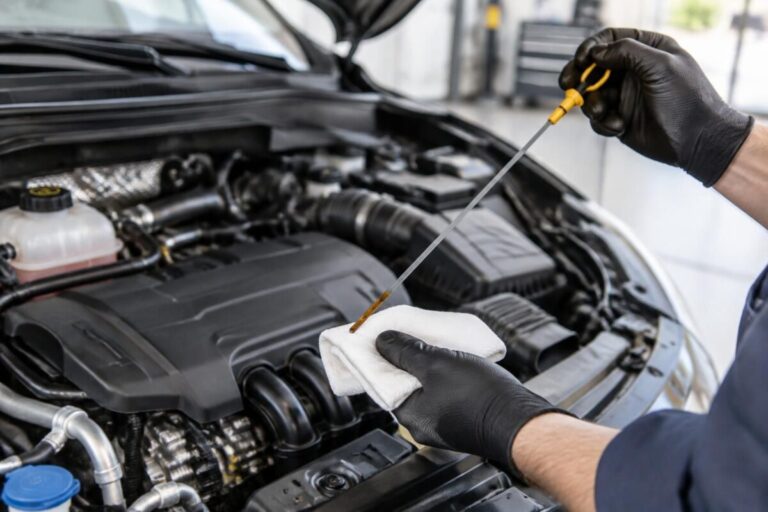

Costly repair: misreading the oil level can hit you hard
Hello, it’s Patrick. Misreading the dipstick can lead you to add too little or too much oil: check it on level ground with the engine off, then top up only with the recommended oil. If the red oil warning light comes on, stop as soon as it is safe to do so and switch off the engine. Regular checks can prevent a simple mistake from turning into a costly engine repair.
Do this immediately:
- Park the car on level ground and switch off the engine.
- Wait a few minutes, or follow the procedure in your vehicle’s manual.
- Remove the oil dipstick, wipe it clean, push it all the way back in, then check the level again.
- If the level is below the minimum, add a small amount of compatible oil and check again.
- If the red warning light stays on, the engine makes an unusual noise, or you can see a leak, do not drive off again.
The reading can be inaccurate if the car is on a slope, the dipstick has not been reinserted properly, or you check it just after switching off the engine. For a reliable method, see these tips on checking the oil level safely and this practical guide to the purpose of the dipstick and how to read it.
Misreading the oil level: why the bill can add up
The dipstick shows whether the oil is between the minimum and maximum marks. A misreading can hide a low oil level, but it can also lead you to overfill the engine: both situations can harm it.
A level that is too low reduces lubrication of moving parts. Too much oil can cause leaks or other problems, depending on the engine design. In serious cases, the damage can result in engine failure and a repair bill that can reach several thousand euros, depending on the model and the extent of the damage.
A broken, illegible, or unsuitable dipstick also makes checking more difficult. If the reading seems inconsistent, do not rely on a single measurement: check the conditions and make sure the dipstick is compatible.
Symptoms you should not dismiss
- Red oil warning light: this may indicate low oil pressure, not just a low oil level.
- Knocking, scraping, or other unusual engine noise.
- Bluish smoke from the exhaust, sometimes associated with burning oil.
- A spot under the car or a repeated drop in the level between checks.
A persistent drop in oil level may be caused by a leak, oil consumption, or a mechanical fault. Topping up may help temporarily, but it does not replace finding the cause.
Oil leak, oil consumption, or engine overheating: find the cause
Worn seals can let oil escape, while wear to certain internal components can increase oil consumption. Engine overheating can also worsen an existing problem and weaken seals.
A Clio brought into the workshop after its driver ignored the oil warning light illustrates the risk: the engine had already been damaged. Stopping promptly and checking the oil regularly could have limited the damage.
| What you notice | Possible cause | What to do |
|---|---|---|
| Oil mark on the ground | Leak around a seal or the sump | Have the cause checked without delay |
| Oil level dropping with no visible spot | Internal oil consumption or a hard-to-find leak | Keep track of top-ups and ask for a diagnosis |
| Red warning light or engine noise | Insufficient lubrication pressure, among other possible causes | Stop safely and switch off the engine |
Repair costs depend directly on the cause. Topping up with the right oil costs little, whereas a head gasket or internal damage can cost around 800 to 1,500 euros or more, depending on the vehicle and the work required.
Check the oil dipstick in three steps
- Step 1: Park on a level surface, switch off the engine, and let the oil settle for a few minutes. If the manual says to check it when cold, follow that instruction.
- Step 2: Remove the dipstick, wipe it clean, reinsert it fully, then remove it again. The level should be between MIN and MAX.
- Step 3: If the level is low, add a small amount of oil that meets the manufacturer’s specifications, then check again. Avoid exceeding the maximum mark.
The amount of oil between the marks varies by engine, often around one litre on many models, but the manual is the definitive reference. One quote to keep in mind: “It’s better to measure twice than to fill at random.”
If the level is slightly low and there is no warning light or unusual noise, top up gradually with the correct oil and monitor the level. If the red warning light is on, there is a major leak, or you hear an unusual noise, switch off the engine and call for assistance rather than continuing to drive.
Prevent low oil levels and avoid engine repairs
A monthly check is a simple guideline, supplemented by a check before a long trip and after an oil change. This vehicle maintenance helps you spot a drop in the oil level before a warning appears, especially if your engine already consumes oil.
Follow the manufacturer’s oil change intervals. They vary depending on the vehicle, the oil used, and driving conditions: intervals of 10,000 to 15,000 km are sometimes recommended, but they do not replace the maintenance schedule specified for your model.
Avoid additives marketed as an automatic fix. They will not repair a leak or a worn part; ask for advice before using one. The best approach is to monitor the oil level and have any repeated drop investigated.
Useful questions about oil levels and repairs
Can you drive with an oil level that is too low?
Avoid driving if the level is below the minimum, and stop safely if the red oil warning light comes on or the engine makes an unusual noise. There is no universally safe distance.
What oil should you add?
Use oil that meets the viscosity and specifications listed in the manual or the vehicle’s maintenance documents. Do not rely solely on a common viscosity grade such as 5W30 or 10W40.
What should you do if the level is above the maximum?
Do not add any more oil, and have the excess removed. An oil level that is too high can cause malfunctions or leaks, depending on the engine.
How much does an oil leak repair cost?
The price varies considerably depending on the part and the time required: a simple repair can cost much less than internal repairs or a head gasket replacement, which can cost around 800 to 1,500 euros or more depending on the model and the situation.
Thanks for reading; best wishes, Patrick