
Motorcycle Maintenance in Winter: Why It Keeps Failing to Start
Hello, Patrick here.
In winter, a motorcycle that won’t start is often suffering from a battery weakened by the cold, sometimes made worse by moisture or an ignition problem.
Winter motorcycle maintenance helps prevent the problem from returning after a few days of being left unused. With a few simple checks, you can identify the cause and protect your motorcycle before the next cold start.
What to do right away
- Check the battery: check its voltage and the condition of the terminals.
- Recharge it with a suitable charger if it is low, without repeatedly cranking the starter.
- Inspect the spark plugs if the engine turns over but won’t start.
- Protect the motorcycle from moisture and check accessible electrical connectors.
- Consult the manual before doing any work on the fuel injection or carburetor.
A difficult start doesn’t always mean there’s a serious problem. To diagnose the symptoms, also see motorcycle battery maintenance and tips for starting a motorcycle in cold weather.
Why the starting problem comes back in cold weather
Cold weather reduces the battery’s ability to supply the current needed by the starter. At the same time, engine oil becomes more viscous in winter, increasing the effort required from the engine during the first few seconds.
A battery that is already worn may start the engine once, then lack power after a cold night. If the motorcycle is ridden infrequently, short trips don’t always make up for the energy used to start it.
Motorcycle battery discharged or electrical system damp
If the starter clicks or turns slowly, start by checking the discharged motorcycle battery and its connections. Loose or corroded terminals can cause the same symptoms as a battery nearing the end of its life.
Moisture in the electrical system can also interfere with connections, especially after washing or parking outside. Dry the motorcycle and inspect visible connectors, without spraying products at random onto the components.
| Symptom | Possible cause | Useful check |
|---|---|---|
| The starter turns slowly | Weak battery or dirty terminals | Check the voltage and connections |
| The engine turns over but won’t start | Ignition or fuel supply | Check the spark plugs and follow the manual |
| The problem occurs after rain | Moisture in the electrical system | Dry and inspect accessible connectors |
These clues can help guide your diagnosis, but they don’t replace a full inspection if the problem persists. A battery that repeatedly goes flat may also point to a charging fault.
Carburetors in winter, motorcycle fuel injection, and spark plugs
On a carbureted motorcycle, cold weather and a long period of inactivity can make it harder for the air-fuel mixture to reach the engine. In winter, a carburetor may require the choke to be used correctly, as specified by the manufacturer, but don’t keep trying if the engine doesn’t respond.
Fuel injection automatically manages part of the starting mixture, but it still depends on a sufficiently charged battery and functioning sensors. In either case, worn or fouled spark plugs can prevent consistent combustion.
Real-world example: after several weeks in the garage, a motorcycle may show a normal dashboard while the engine turns over too slowly to start. The dashboard uses very little power, so it doesn’t prove that the battery can properly power the starter.
Three steps to find the cause
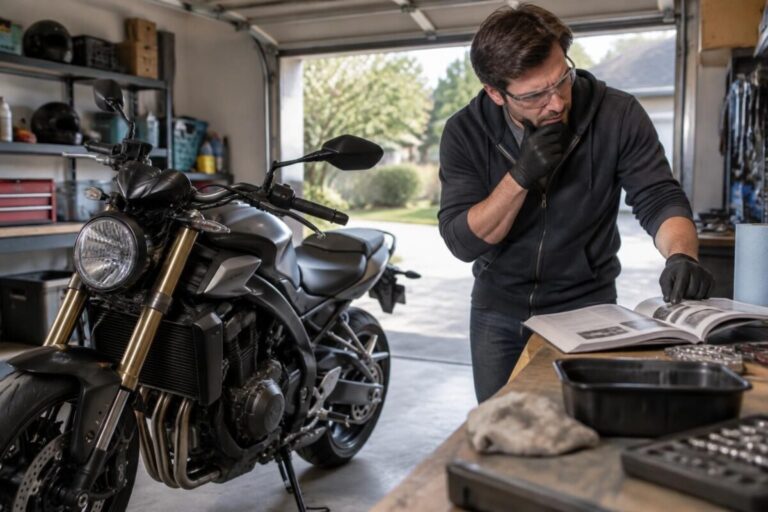
- Observe the symptom. Note whether the starter is silent, slow, or operating normally, and whether the warning lights dim. These details help distinguish an electrical weakness from an ignition or fuel supply problem.
- Check the simple things. Check the terminals, visually inspect the cables, and check the battery charge with a suitable device. If the charge drops quickly, have the battery and charging system tested.
- Avoid repeated attempts. Let the starter cool between attempts and consult the manual for information on the spark plugs or fuel system. If the motorcycle still won’t start, a professional diagnosis will help avoid making the problem worse.
This method avoids unnecessary actions and helps you give the mechanic precise information. If the problem keeps recurring, the cause needs to be investigated rather than just recharging the battery once.
Preparing your motorcycle for winter: prevent the problem from returning
Preparing your motorcycle for winter starts with keeping the battery charged using a compatible device, especially if the motorcycle will be out of use. Keep it in a dry, well-ventilated place, and opt for rides that are long enough to let the charging system do its job.
Also check the tire pressure, fluid levels, and general condition of the cables before a long period of storage. A breathable cover protects the motorcycle from dirt without trapping moisture against it.
The right approach is simple: keeping the battery maintained, the connections clean, and the motorcycle stored in a dry place will greatly reduce unpleasant surprises when starting it in cold weather.
Why does my motorcycle only start after I recharge the battery?
The battery may be worn out, not being properly recharged by the charging system, or being strained by trips that are too short. If the problem returns, have the battery and charging system checked.
Should I keep trying the starter in cold weather?
No. Prolonged attempts can overheat the starter and drain the battery further. Make short, spaced-out attempts, and stop if the engine doesn’t respond.
How can I prevent my motorcycle battery from going flat in winter?
Use a compatible maintenance charger if the motorcycle will be left unused for a long time, check the connections, and avoid repeated starts followed by very short trips.
Can cold weather prevent a fuel-injected motorcycle from starting?
Yes. Fuel injection can’t compensate for a battery that’s too weak, an electrical fault, or worn spark plugs. Cold weather can make these weaknesses more noticeable.
Take good care of your companion and share your observations in the comments. — Patrick