How to balance a car wheel without a machine?
Hi, it’s Patrick. Without a motorized wheel balancer, a static check is still possible with a suitable stand, but it doesn’t necessarily replace dynamic balancing of a car wheel. Without measuring equipment, you can mainly inspect the tires and describe the vibrations before having them checked at a shop. Adding weights at random or spinning a wheel by hand while it’s on the car won’t confirm that it’s balanced.
The goal here is to distinguish an initial check from proper balancing. Michelin explains that the shop measures the imbalance of the tire-and-wheel assembly to determine where to place the weights and how much weight to add. To prevent other problems, also find out how to prevent premature tire wear.
What to do right away:
- Park safely and check the tire pressure when cold, following the vehicle’s specifications.
- Inspect the sidewalls and tread without removing or deflating the tire.
- Note the conditions under which you’ve noticed vibrations: speed, braking, acceleration, recent impact.
- Tell the professional if a wheel weight is missing or if the tires were recently changed.
- Have any persistent vibration checked promptly; don’t drive at high speed to try to reproduce it.
Don’t confuse “without a motorized machine” with “without equipment.” A static stand can reveal a heavy spot, but a wheel can seem stable on the stand while still having a dynamic imbalance. Internal balancing beads aren’t a universal solution: their use depends on compatibility as specified by the tire, wheel, and tire pressure monitoring system manufacturers.
Recognizing the signs of poorly balanced car tires
Do you feel vibrations in the steering wheel above a certain speed? This is often a sign of an imbalance. An unbalanced tire wears out faster and can damage the suspension. The tip: carry out a quick visual check. Check whether the tread has unevenly worn areas or whether there are any bumps on the wheel rim.
Checking wheel rotation and tire wear
Vibration alone doesn’t identify poor balancing: a damaged tire, a bent wheel rim, or a suspension component could also be the cause. A visual inspection doesn’t measure imbalance or confirm that the wheel is safe.
Three steps to prepare for a wheel balancing check
- Observe: note the symptoms and any recent events, without removing the wheel if you don’t have the proper equipment and lifting procedure.
- Have it measured: ask for the wheel-and-tire assembly to be checked; the technician will choose the appropriate method and compatible weights.
- Have the result checked: after the correction, the shop checks the balance again. If the vibrations persist, further diagnosis is needed.
Static or dynamic balancing: the differences
| Method | What it can do | Limitation |
|---|---|---|
| Visual check at home | Identify a visible problem or describe a symptom | Doesn’t measure imbalance |
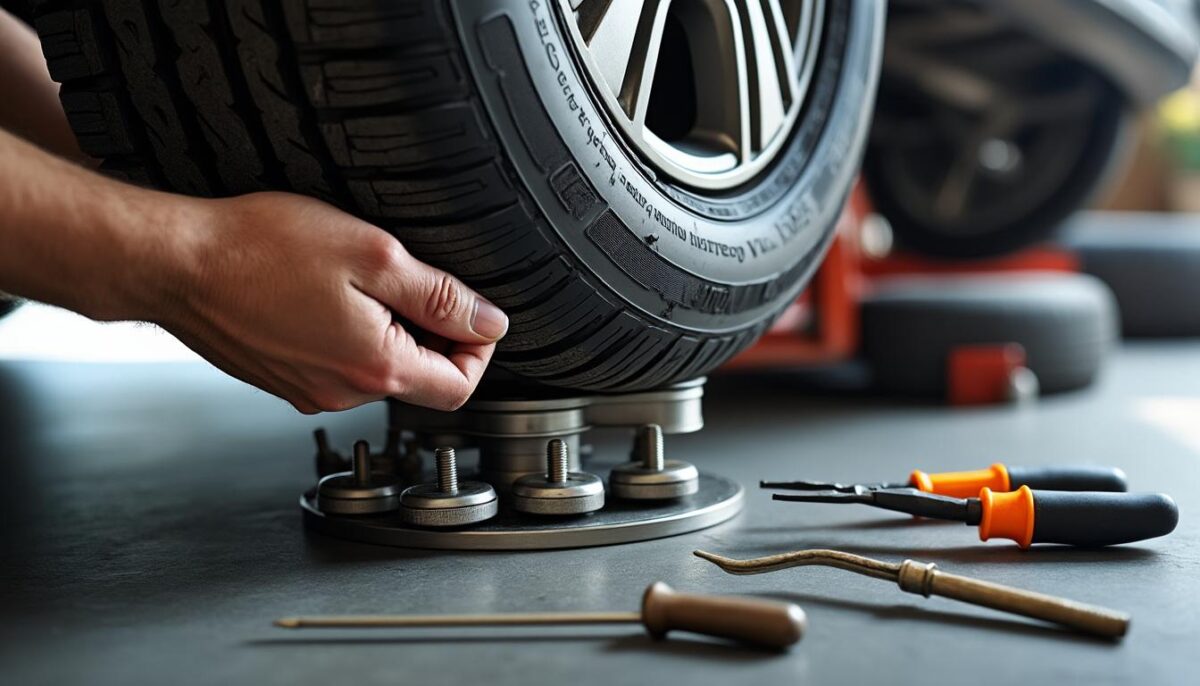
| Static balancing on a suitable stand | Correct a heavy spot in one plane | Doesn’t detect every dynamic imbalance |
| Dynamic balancing at a shop | Measure and correct imbalance across multiple planes | Requires a properly calibrated machine and suitable mounting |
| Wheel alignment or tracking | Check the wheel angles | Doesn’t replace weight balancing |
Tire balancing and road safety
Tire balancing has a direct impact on road safety. A well-balanced wheel provides optimal grip and prevents harmful steering wheel vibrations, which can make sudden braking or driving on wet roads more hazardous. It also helps control tire wear, contributing to good grip on the road. As an experienced mechanic once said: “A balanced tire is one more step toward a safe and comfortable journey.”
What a hand test can’t check
Don’t stick tape or makeshift weights inside the tire. Spinning a wheel by hand on its hub doesn’t replicate a measurement on a wheel balancer. Continental distinguishes between static support and dynamic measurement: both methods require suitable equipment. If a tire has a bulge, a deep cut, or a deformation, don’t try to fix the problem by balancing it.
How can you prevent premature tire wear?
Proper tire balancing already makes a big difference. To go further, make sure your tire pressure is correct, your wheels are properly aligned, and you drive carefully on well-maintained roads. If in doubt, always consult your vehicle’s manual or any of the car maintenance tips available on the blog.
Can you balance a wheel without any machine?
Without suitable equipment, you can’t accurately measure imbalance. A static stand is already specialized equipment and doesn’t always replace dynamic measurement.
Can you balance all types of tires without a machine?
No. The method depends on the tire-and-wheel assembly and the manufacturers’ specifications. For a car, ask a shop to carry out an appropriate check.
What are the dangers of driving with unbalanced tires?
Vibrations can tire the driver, cause rapid tire wear, affect handling, and increase the risk of an accident.
Does manual balancing completely replace shop balancing?
No. A static check can leave a dynamic imbalance. The absence of an obvious heavy spot isn’t enough to confirm that the wheel is properly balanced.
Can you balance tires yourself if you have no experience?
If you have no experience, stick to checks you can safely carry out and leave measurement and correction to a specialist. Don’t deflate the tire or add weights at random.
Thanks for reading; best wishes, Patrick