
10 Maintenance Tips to Keep Your Motorcycle More Reliable
Hi there, it’s Patrick.
To keep your motorcycle reliable, regularly check its key components and follow the manufacturer’s maintenance schedule.
A few simple checks can help you spot wear before it turns into a breakdown. The exact intervals vary depending on the model, mileage, and how you use it: the manual is your go-to reference.
Do these checks now
- Check tire pressure when the tires are cold, using the values specified by the manufacturer.
- Inspect the motorcycle chain: tension, lubrication, and signs of wear.
- Test the brakes and check the condition of the brake pads and discs.
- Keep an eye on the battery, especially after a period without riding.
- Note maintenance due dates in a logbook or on your phone.
To plan your motorcycle maintenance before a problem arises, also keep in mind the signs that indicate routine maintenance is no longer enough.
10 motorcycle maintenance tips to prevent breakdowns
A reliable motorcycle doesn’t necessarily require complicated work. Consistency is what matters: a quick check after a ride can reveal a leak, a loose part, or unusual wear.
Here are ten checks to build into your routine. Always adapt the procedures and their frequency to the manufacturer’s recommendations.
1. Follow oil change intervals
Changing the oil at the right time helps protect the engine. Use oil that meets the specifications in the manual, and replace the oil filter when the maintenance schedule calls for it.
Repeated very short trips, intensive use, or long periods of inactivity can make it even more important to keep up with maintenance. The right interval is the one that suits your motorcycle and how you use it.
2. Check tire pressure when the tires are cold
Incorrect pressure can affect handling and accelerate wear. Measure it before riding with a reliable pressure gauge, then compare the result with the recommended values.
While you’re at it, inspect the tires for cuts, embedded objects, cracks, or uneven wear. Any issue should be checked before your next ride.
3. Maintain the motorcycle chain
A chain that is too dry, too tight, or too loose wears out faster and can affect power transmission. Clean and lubricate it according to the manufacturer’s recommendations, then check its tension at the point specified in the manual.
A chain with seized links or significant wear should be inspected. Remember to check the condition of the sprockets too.
4. Keep an eye on the brakes
Check the thickness of the brake pads, the condition of the discs, and the brake fluid level. A spongy lever, unusual noise, or reduced braking performance should not be ignored.
Brakes are a safety-critical component: if you spot a leak or anything behaving abnormally, have the motorcycle checked before riding again.
5. Look after the battery
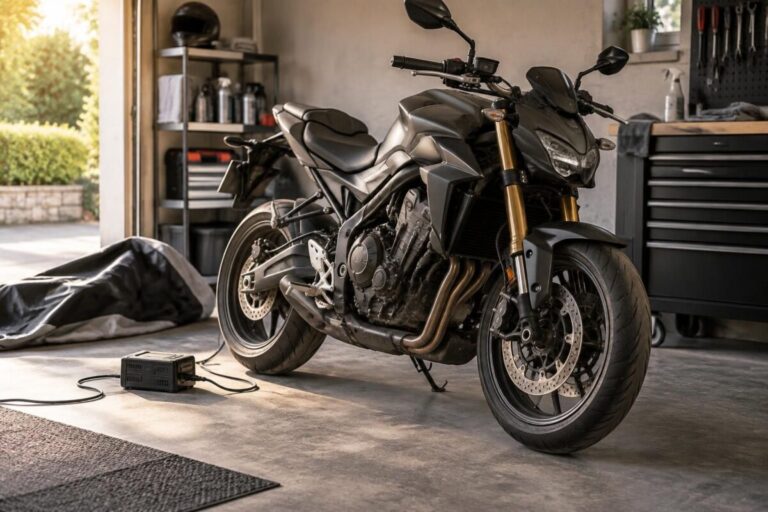
A battery can go flat when the motorcycle is left unused, especially in cold weather. Keep its terminals clean and secure, and use a suitable charger if the manual recommends it.
If the engine becomes difficult to start or the electrical equipment starts to weaken, have the battery and charging system checked instead of repeatedly trying to start it.
6. Inspect the air filter
A clogged air filter can interfere with engine performance. Check it at the recommended intervals and replace or clean it only according to the instructions for its type.
After riding on dusty roads, a closer inspection may be helpful. A clean filter contributes to smooth running.
7. Check the spark plugs
Worn or dirty spark plugs can make the engine difficult to start and cause it to run unevenly. Check their condition and replacement interval in the maintenance schedule.
If you don’t have the right tools or access is complicated, leave this job to a professional. A proper inspection helps prevent damage to the threads or connectors.
8. Check fluid levels and look for leaks
Check the oil and coolant levels if your motorcycle has them, following the procedure in the manual. A fresh spot under the vehicle or around a fitting may indicate a leak.
Don’t just top up a fluid if its level keeps dropping: you need to find out why.
9. Clean without damaging components
Regular cleaning makes it easier to spot corrosion, cracks, and loose parts. Use suitable products and avoid directing a powerful jet at bearings, electrical connectors, or seals.
After washing, dry the motorcycle and lubricate the components that need it. A proper cleaning is also an opportunity to inspect the bike.
10. Schedule regular servicing
Regular servicing helps check less visible components and keep track of work already completed. Record the date, mileage, parts replaced, and any issues you’ve noticed.
This record helps you plan for expenses and explain a symptom to your mechanic more clearly. When it comes to reliability, a written record is better than a vague memory.
| Item to check | Good practice | What to watch for |
|---|---|---|
| Tires | Measure when cold | Incorrect pressure, cuts, or uneven wear |
| Motorcycle chain | Check tension and lubrication | Seized links or significant wear |
| Brakes | Inspect brake pads and fluid level | Leak, noise, or spongy lever |
| Battery | Keep the terminals clean | Slow starting or loss of power |
| Engine | Follow oil change intervals | Leak or steadily dropping fluid level |
Motorcycle maintenance mistakes that undermine reliability
Rushing is a common pitfall: tightening a chain “by eye,” inflating a tire after riding, or topping up a fluid without investigating why its level is dropping can hide a problem.
For example, if the pressure seems unusually low several times in a row, check the tire and valve instead of simply inflating it before every ride. A recurring symptom needs a diagnosis.
A simple three-step method
- Consult the manual for the values, products, and intervals suited to your model.
- Inspect the motorcycle regularly, noting any noises, leaks, or changes in how it behaves.
- Call in a professional as soon as a safety-critical component or a complex breakdown is involved.
This routine turns maintenance into an easy habit to keep up. It doesn’t replace necessary repairs, but it helps you catch problems sooner.
Practical questions about motorcycle maintenance and reliability
How often should you check your motorcycle?
Carry out regular visual checks, especially before a long ride, and follow the inspection and servicing intervals specified in the manufacturer’s manual.
Can you check tire pressure after riding?
For an accurate reading, check the pressure when the tires are cold. Heat changes the reading and can make it difficult to compare with the manufacturer’s recommendations.
What signs mean your motorcycle needs a prompt inspection?
A leak, unusual braking, a damaged chain, difficulty starting, or repeated loss of power warrant an inspection without delay.
Is home maintenance enough to keep a motorcycle reliable?
Routine checks help a lot, but some tasks require tools, skills, or professional inspections. Follow the manufacturer’s maintenance schedule.
Take good care of your companion and share your observations in the comments. — Patrick