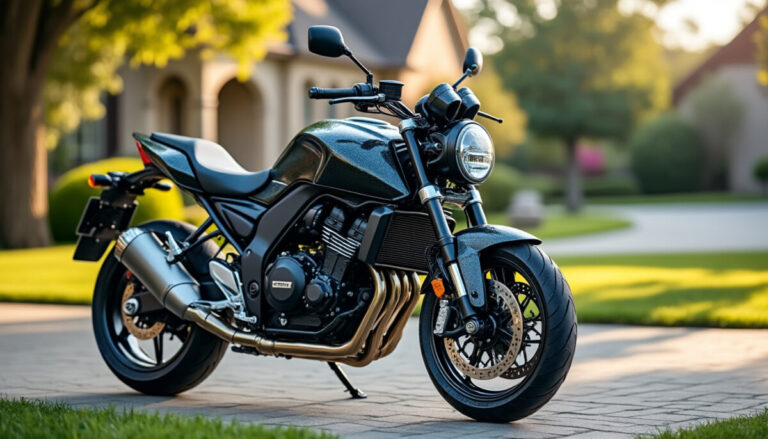

Motorcycle idle adjustment: how to keep it from stalling
Hello everyone, I’m Patrick. To stabilize your motorcycle’s idle, start by comparing the warm engine speed with the value in the manual and noting when it stalls; only touch a screw if the manufacturer specifies this adjustment. On a fuel-injected motorcycle, the idle may be electronically controlled: raising the engine speed at random can mask the fault instead of fixing it.
Idle adjustment differs depending on whether your motorcycle has a carburetor or fuel injection. With motorcycle fuel injection, the system is more sophisticated and controlled by the ECU, but the presence of an accessible screw does not mean it is intended for user adjustment. In this complete guide, you’ll find tips to avoid a frustrating idle problem and keep your motorcycle maintenance effective. If you’re looking to avoid a loss of motorcycle power or make a motorcycle more reliable for rough roads, these tips will be very useful.
Unstable motorcycle idle: identify the symptoms before adjusting it
Engine idle is the speed at which the engine runs without accelerating. Note whether the problem occurs only when cold, after warming up, when an accessory is switched on, or after work has been done. These observations are more useful than an improvised adjustment. Repeated stalling in traffic means you should have the motorcycle checked before continuing to ride it.
An idle speed that is too low can lead to stalling; an idle speed that is too high also needs to be explained. There is no universal value for all motorcycles. Check the engine speed and measurement conditions specified for your model, and don’t apply a range found for another machine.
How to identify an idle problem on your motorcycle
Several signs should raise concern:
- Engine speed fluctuating for no apparent reason
- Stalling when stopped, especially when hot or with accessories switched on
- Engine hesitates to start
- Vibrations and a tendency to “splutter” in neutral
An unstable idle seriously affects safety and the enjoyment of riding. In these cases, it’s best to act before the problem gets worse. It’s also important to inspect the ignition system and the condition of the spark plugs, and rule out any air leaks that could disrupt the air-fuel mixture.
When cold, hot, or after work has been done: what should you note?
- Only when cold: note the outside temperature and whether the engine speed stabilizes afterward, without changing the warm idle setting to compensate.
- Engine warm: note the displayed engine speed, fluctuations, warning lights, and any stalling. The filter, ignition, intake, or engine management system are things to check, not definite diagnoses.
- After maintenance or a modification: report exactly what was changed. Check only accessible parts with the engine off; don’t spray flammable products to look for an air leak.
Adjusting the idle on a fuel-injected motorcycle: what depends on the model
Recent fuel-injected motorcycles often don’t have an accessible fixed adjustment screw. The idle is electronically controlled by the ECU via a stepper motor or IACV valve. Adjustment then requires specialized software or a diagnostic tool. This adjustment is sensitive and is often reserved for professionals. Some models allow manual adjustment. First check the procedure for your motorcycle; the Yamaha manual given as an example instructs users to have a dealer adjust the idle. This example does not establish the procedure or value for all motorcycles. Initial checks include:
- Conditions specified in the manual: measurement temperature, expected engine speed, and inspection method
- Motorcycle stable and in neutral, in an open area, away from hot or moving parts
- Identify an idle control only if it is described in the manual; do not touch the throttle stops or synchronization screws
- Read the engine speed on the tachometer: your ear can’t confirm a value in rpm
- If the engine speed is outside the specified range or stalling persists, stop making adjustments and have the cause investigated
Be careful not to confuse the idle screw with the mixture screw. A mistake can seriously disrupt the fuel mixture and engine operation. For more information, this guide on increasing motorcycle power safely will provide you with other essential insights.
Key adjustments and checks for optimal idle
| Component | Recommended check | Consequence of a problem | Recommended frequency |
|---|---|---|---|
| Spark plugs | Condition, correct part number, and specified gap | Unstable idle, misfires, stalling | According to the model’s maintenance schedule |
| Air filter | Cleanliness, no blockage | Incorrect air/fuel mixture, uneven idle | According to the manual and riding conditions |
| Idle control, if provided | Position, no sticking | Incorrect idle, stalling | Only according to the manufacturer’s procedure |
| Air leaks | Intake airtightness | Unstable idle, engine spluttering | Always check if there is a problem |
| Battery and charging system | Voltage, correct charging | Weak ignition, difficulty idling | Before every long ride and in winter |
Prevent idle problems with regular motorcycle maintenance
The saying “Prevention is better than cure” applies perfectly here. Proper engine maintenance prevents many problems related to engine idle. Regularly changing the air filter, monitoring the condition of the spark plugs, checking for air leaks, and not waiting for a fault to appear before taking action are all practical steps.
Frequent checks of the charging system also help prevent an undercharged battery from causing an unstable idle. To deepen your knowledge, be sure to read the article on preventing motorcycle overheating in traffic jams, which complements this topic well.
How can I tell if my motorcycle has an unstable idle?
You’ll notice fluctuating engine speed, frequent stalling when stopped, difficulty starting, and unusual vibrations in neutral.
Can I adjust the idle myself on a fuel-injected motorcycle?
Only if the manual for your model describes a user adjustment. A visible screw may be a stop screw or a synchronization screw that should not be adjusted. Otherwise, have it checked by a workshop.
What are the common causes of an unstable engine idle?
Air leaks, a dirty air filter, worn spark plugs, a weak charging system, or a dirty fuel-injection system are the main causes.
What is the recommended idle speed for a motorcycle?
The value and measurement conditions are specific to your model. Use its manual; a generic range can’t confirm that the adjustment is correct.
Thanks for reading; best wishes, Patrick