
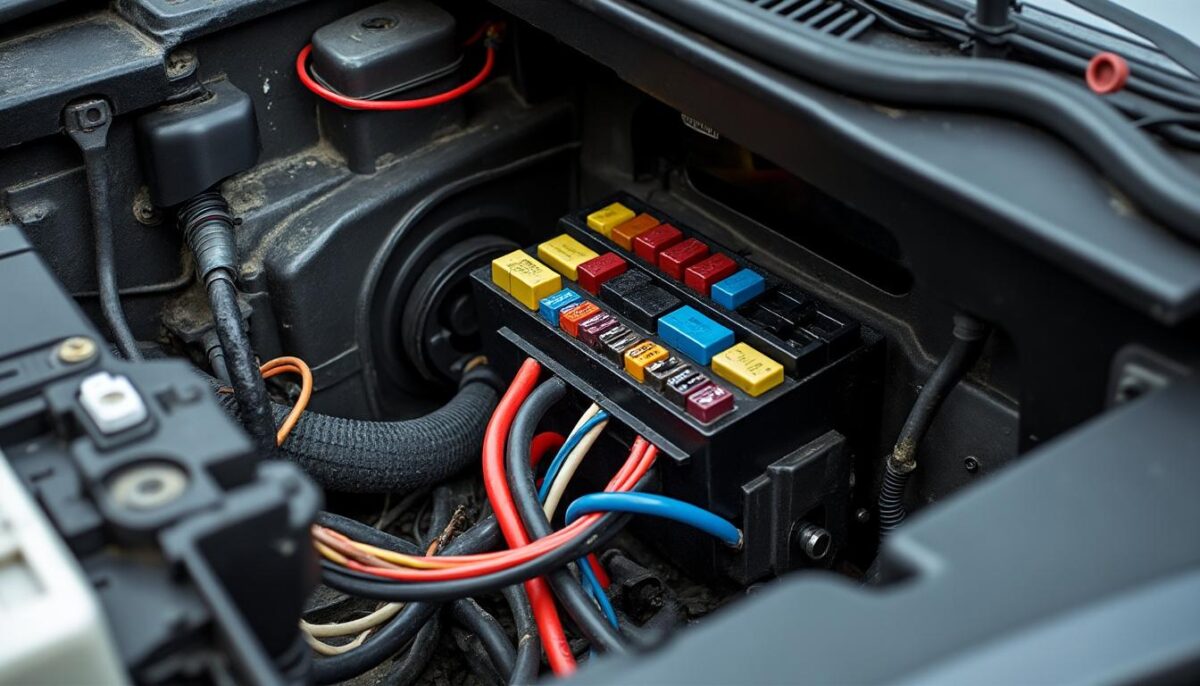
Car electrical fault: how to spot it quickly?
Hello everyone, I’m Patrick. To locate an intermittent connection in a car, start with the circuit that cuts out, note the conditions under which the fault occurs, and inspect its accessible connections before replacing any parts. A poor connection can cause strange problems: a warning light that flickers, a headlight that works poorly, an engine that stalls, or an electrical accessory that cuts out for no reason. Most often, the problem comes from a plug, a ground connection, a damaged cable, or a corroded connector. Before taking everything apart, look for the signs and check the simplest connections first.
To get started, it helps to know that intermittent connections are often found close to a plug, terminal, or switch. A fault related to vibration may point to a connection, but do not shake an engine wiring harness while the engine is running or disconnect connectors while they are live. This malfunction causes intermittent cutouts, lights that go out, or erratic turn signals. The measurements you take should depend on the circuit: a continuity test with the power off and a voltage drop test while the circuit is operating do not answer the same question. To learn more about your electrical diagnostic tools and methods, you can also read this new cable that no longer makes a connection or find out how to spot an electronic fault before it gets worse.
Intermittent connection in a car: symptoms and other possible faults
A flickering headlight or intermittent turn signal may point to a poor connection, but it could also be a faulty bulb, socket, relay, or module. If several components weaken at the same time, check for a shared power supply or ground connection. A fuse that repeatedly blows may indicate a short circuit: it is not proof of a simple intermittent connection.
With the engine off, start by checking visible and accessible components: an unlocked connector, corrosion, a chafed wire, or signs of overheating. Before disconnecting anything, follow the vehicle’s procedure, including any required waiting periods. A burning smell, melted cable, or fault affecting a safety system means you should stop testing and have the vehicle checked by a professional.
Best practices for effective electrical diagnostics
The Fluke guide to automotive voltage drop testing explains that a connection may seem fine when idle but fail to supply a component properly under load. A simple continuity beep is therefore not enough to validate the entire circuit. Testing while the circuit is operating requires the wiring diagram, access points, and specified values: do not probe ECU pins at random.
For example, if a rear light works on its own, then dims when the brake and turn signal are used, a repair shop will check the ground connection and shared connections, among other things. This observation helps guide the diagnosis; it does not prove that a solder joint needs to be redone. Describe exactly what happens rather than replacing the light immediately.
Three things to check before getting out the multimeter
- Pinpoint the fault: Is it one device, one side of the vehicle, or several functions? Also note whether it happens in wet weather, with vibration, or after recent work.
- Look without forcing anything: Take photos of visible issues; do not pierce the insulation or pull on wires to disconnect a plug.
- Choose the right test: Check continuity with the power off and the circuit isolated; an intermittent fault may require testing under load at a repair shop.
An inspection light and measuring accessories in good condition make these checks easier to see. To set up a tidy work area and choose suitable equipment, you can read the advice on workshop tools and safety, then check the specifications required in your vehicle’s documentation.
Mistakes to avoid so you don’t make electrical faults worse
Working without a clear diagnosis is the worst mistake. Replacing a part without checking the wiring can actually hide a more serious fault. Avoid harsh connector cleaners and use specific products that are safe for conductive metal. Likewise, be careful not to confuse an intermittent connection with a battery or alternator problem, as the symptoms can be similar. Depending on the wiring diagram, diagnosis may include checking fuses and relays. Never replace a fuse with one of a higher rating to stop it from blowing.
Do not use a high-voltage insulation tester on a wiring harness connected to the vehicle’s electronics. Do not measure resistance across a battery’s terminals or on a live circuit. The table distinguishes useful observations from checks that require the appropriate procedure.
| Area | Useful observation | Appropriate check |
|---|---|---|
| Terminals and low-voltage power supply | Several devices weaken or cut out | Visual inspection, then voltage measurements according to the manual |
| Light or turn signal | Fault limited to one side or linked to another function | Check the bulb, socket, connector, and ground connection before drawing a conclusion |
| Wiring harness | Chafed insulation, corroded connector, or signs of overheating | Check with the power off and repair in accordance with the circuit specifications |
| Fuse | Another cutout after replacement | Stop replacing fuses and find the cause without increasing the fuse rating |
| Ground points | Several functions affected at the same time | Voltage drop test under load performed by a qualified person |
How can you prevent intermittent connections in the future?
The best way to reduce faults is to maintain connections regularly and prevent corrosion from building up. Periodically inspect terminals and wiring, especially after long trips or exposure to moisture. Apply a protective product only if the manufacturer recommends it; some greases should not be applied to contact surfaces. Don’t overlook a broken locking tab, a missing seal, or a loose wire. By making these regular checks part of your routine, you’ll not only protect your car but also feel more confident and safer on the road.
If the wire or its insulation looks damaged, continue with our guide on how to identify a damaged electrical cable. Airbag and braking circuits, as well as the high-voltage systems in hybrid and electric vehicles, are beyond the scope of these do-it-yourself checks.
How can you quickly identify an intermittent connection in a car?
An intermittent connection often causes lights to cut out, a turn signal to stop working, or the engine to stall. Note the circumstances of the fault and inspect accessible connections with the engine off. Take measurements afterward, following the vehicle’s wiring diagram and procedure.
Can you repair an intermittent connection yourself?
It depends on the circuit and your experience. A connection may need to be repaired or replaced in accordance with the specifications; safety circuits and unidentified faults should be handled by a professional.
What tools are essential for diagnosing an intermittent connection?
A light, the vehicle’s wiring diagram, and a suitable multimeter are useful. A standard test light can damage some electronic circuits; do not use one unless the procedure specifically allows this test.
What are the signs of a more serious electrical fault?
Fuses that blow frequently, a battery that drains for no apparent reason, or illuminated engine warning lights may indicate a more serious problem than a simple intermittent connection.
How can you protect your car’s electrical connections?
Check accessible fasteners, locking tabs, seals, and areas where wires may chafe. Use only the products and methods specified for the connector in question.
Thanks for reading; all the best, Patrick