
First Car: How to Choose Without Buying a Problem
Hello, it’s Patrick. To choose a car for a beginner without buying yourself a problem, set a complete budget, look for a reliable model, and have it inspected before signing. Your first car doesn’t need to be powerful or spectacular: it should be safe, easy to drive, and suited to your journeys. The asking price doesn’t tell the whole story; insurance, fuel, tires, and repairs also add to the cost of buying a car. With a few practical checks, you can avoid common pitfalls when buying and still enjoy hitting the road.
Do this right away:
- Set a car budget that includes insurance, registration, and maintenance costs.
- Request an insurance quote for each model before going to see it.
- Choose three comparable listings with a service history you can review.
- Check the safety features and Euro NCAP ratings for the generation in question.
- Plan a road test and a vehicle inspection by an independent mechanic.
To compare your options and prepare for your purchase, also see this guide to tools for choosing a first car and these tips on costs to budget for beyond the purchase price.
Choosing a car for a beginner based on your budget and journeys
Start by estimating your annual mileage and the types of journeys you make. A small petrol car often suits city driving and short trips; a hybrid may be a good option if you do a lot of driving in town. A diesel is generally more suitable for regular long journeys, depending on the model and situation, and on the Crit’Air rules in the cities you drive through.
For a first car, a recent used model can offer a good balance of price, features, and depreciation. Compare the total cost, not just the listed price: depending on the model and situation, insurance for a young driver can vary from several hundred to over a thousand euros per year. Tires, brakes, and servicing all add to the cost of maintenance.
If you’ll mainly be driving in the city, consider an easy-to-handle city car such as a Clio, 208, Yaris, or Sandero. If you’ll do a lot of highway driving or often carry passengers, look for a comfortable, well-equipped compact car rather than a bare-bones small model.
| Criteria | What to check | Why it’s useful |
|---|---|---|
| Budget | Price, insurance, fuel, maintenance | Helps you avoid a car that’s affordable to buy but costly to run. |
| Safety | ESP, airbags, emergency braking depending on the version | Features sometimes vary from one trim level to another. |
| Reliability | Receipts, service book, inspections, and recalls | A consistent history reduces the risk of hidden faults. |
| Use | City, road, parking, passengers | A car suited to your needs is easier to drive every day. |
“The right choice is one that remains affordable after you’ve bought it.” A Honda Civic or a Toyota Corolla may be worth considering if the price, condition, and insurance fit your budget; for everyday use in France, also compare popular city cars and their parts costs.
Vehicle inspection: steps to avoid pitfalls when buying
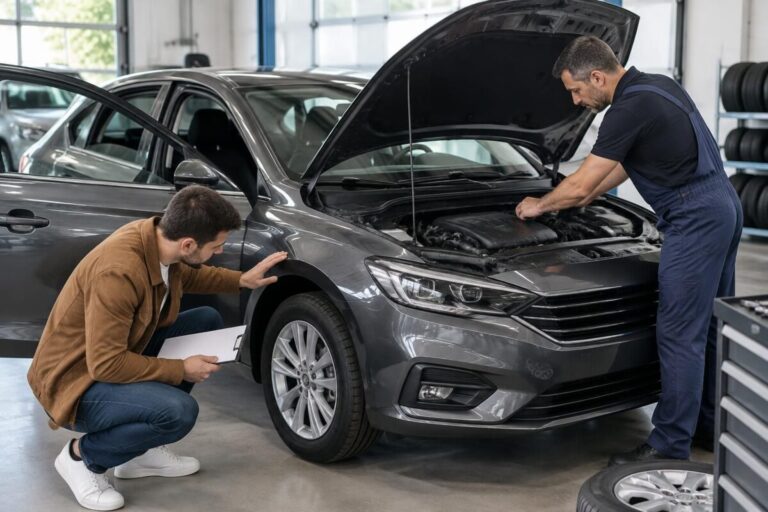
A shiny car can conceal repairs that are just around the corner. An incomplete service book, missing receipts, or worn tires don’t necessarily rule out a listing, but they do call for questions and a thorough inspection. Car reliability depends on the model, but also on the specific vehicle and how it has been maintained.
A first-time buyer recently spotted a city car at a tempting price; an inspection revealed that the brakes were close to needing replacement and the car was overdue for servicing. By factoring these costs into the negotiation, the buyer avoided an immediate expense that would have been higher than expected.
The three-step process before buying a car
- Step 1: Ask for the receipts, service book, roadworthiness inspection report, and vehicle documents. Check that the information matches and that the seller can clearly answer questions about the vehicle’s history.
- Step 2: Test-drive the car on several types of road. Test the brakes, steering, gearbox, and features; listen for unusual noises and check the warning lights when starting the car.
- Step 3: Arrange an independent inspection before paying. Get a quote for any work needed, then decide based on the final price, including insurance.
For driver-assistance features, check the exact trim level: automatic braking or lane-departure warning isn’t available on every version. A simple, well-maintained car with essential safety features is often a better choice than a highly technical model whose repairs would be difficult to afford.
Models and features to compare for a first car
A Toyota Yaris, Renault Clio, Peugeot 208, or Dacia Sandero may suit a beginner, depending on the year, engine, and condition. Compare the versions rather than relying on the model name alone: safety, visibility, handling, and parts availability vary between generations.
On the other hand, be cautious about a very powerful car, a rare version, or a complex electric vehicle bought outside the warranty period without a repair budget. A low price may come with limited comfort, fewer features, or high costs; get quotes and check parts availability before making a decision.
A popular used model may also be easier to insure and resell. But no ranking can replace a test drive and a review of the vehicle’s history: the car’s actual condition should be the deciding factor.
Practical questions about choosing a car for a beginner
New or used car for a beginner?
A used car is often more affordable and loses less value, but it needs to be checked carefully. A new car comes with a warranty and up-to-date features, but usually has a higher purchase price and insurance cost.
Which type of engine should I choose for short trips?
A petrol car is often suitable for low-mileage drivers and city journeys. A hybrid may be a good fit for frequent city driving; always compare the price, insurance, and charging needs depending on the model and situation.
How can I reduce the insurance cost of a first car?
Get several quotes before buying and compare models with different power outputs and values. Where the car is parked, the driver’s age, and the type of coverage chosen can all significantly affect the price.
Should I have a used car inspected?
Yes, an independent mechanic can spot faults that aren’t obvious during a test drive. An inspection complements the receipts, service book, and roadworthiness inspection report; it doesn’t replace them.
Thanks for reading; best wishes, Patrick