Used car: how to avoid a toxic bargain
Hi, it’s Patrick. To avoid a toxic bargain, check the history, paperwork and mechanics, then take the car for a test drive before paying. In 2026, there are plenty of listings, but an attractive price can never replace solid evidence. The guiding principle in my article is simple: take your time, ask questions and set aside some money for upcoming expenses.
A clean-looking vehicle may hide a poorly repaired accident, neglected maintenance or an inconsistent odometer. A good deal is judged by the entire file, not by the first impression.
Things to do immediately:
- Compare the price with several similar listings.
- Ask for the VIN, service book and maintenance invoices.
- Check the roadworthiness test and the vehicle’s administrative status.
- Inspect the car in daylight with the engine cold.
- Plan a test drive and, if necessary, an independent mechanical inspection.
To complement this initial check, read these tips on common pitfalls when buying and questions to ask the seller.
Check the budget and history of the used car
Don’t confuse the asking price with the total cost. Add insurance, registration, any servicing and repairs identified before the sale. Depending on the model and circumstances, tires, brakes or a timing belt can quickly add up to several hundred euros.
Ask for the maintenance report, invoices, certificate of administrative status and roadworthiness test report. For a car more than four years old sold to a private buyer, the roadworthiness test generally needs to be less than six months old, or less than two months old if a retest is required.
With the VIN, you can consult Histovec to review the available information about the vehicle’s history. Cross-check the recorded mileage against the invoices and previous inspections: verified mileage should be supported by traceable evidence, not just the seller’s word.
Administrative checks matter just as much as the mechanical condition: make sure the seller is the registered owner of the vehicle and that the transfer can go through without any issues. An incomplete file is not a formality to deal with later; it’s a reason to put the purchase on hold.
Spot the warning signs before you go to see the car
A price far below comparable listings calls for a clear explanation. An accident, an imminent breakdown, overlooked expenses or a possible car scam: ask why the price is low and verify the answers with documents.
Also look for consistency between the wear and the mileage. A smooth steering wheel, very worn pedals or a sagging seat don’t prove anything on their own, but they become concerning if the invoices and records tell a different story.
A seller who pressures you to pay a deposit, refuses an inspection or won’t show you the car in person should raise suspicions. “No proof, no signature”: this simple rule can prevent a lot of regrets.
Once, a buyer nearly drove away with a small city car listed at a low price. An overlooked invoice revealed that the timing belt needed replacing soon; the cost changed the whole negotiation.
Inspect the bodywork, mechanics and equipment
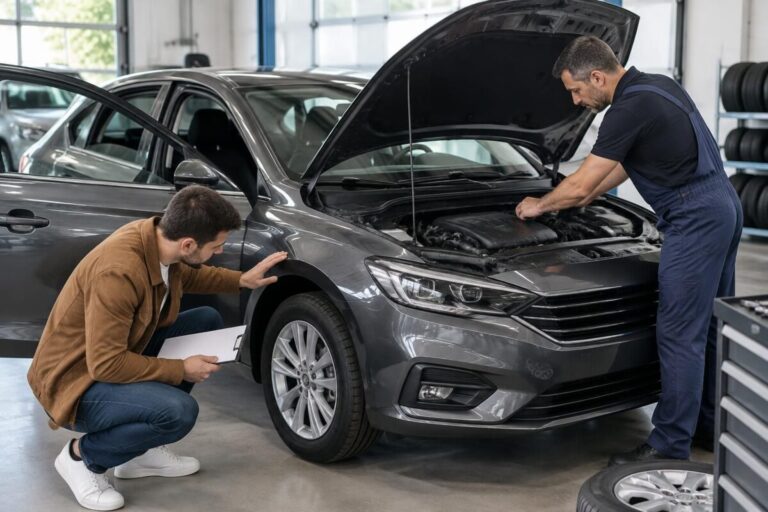
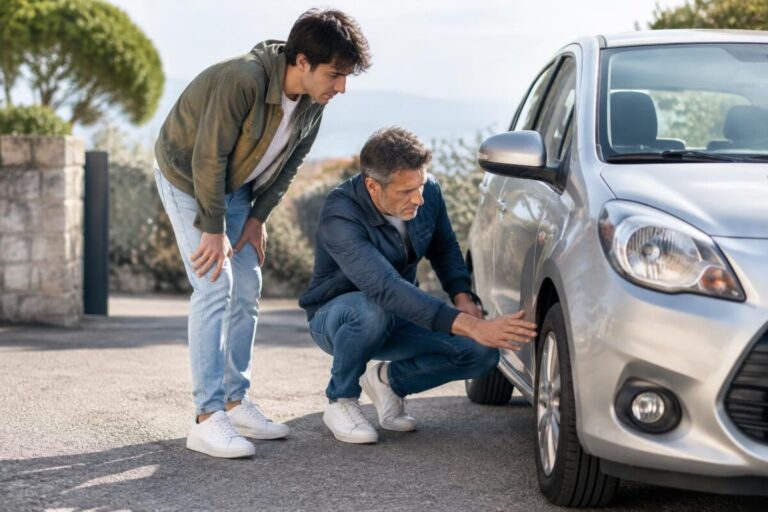
Walk around the vehicle in broad daylight. Look for differences in paint shade, misaligned panels, rust on the sills and signs of damp inside the cabin. Check the tires too: uneven wear can indicate an alignment or suspension problem.
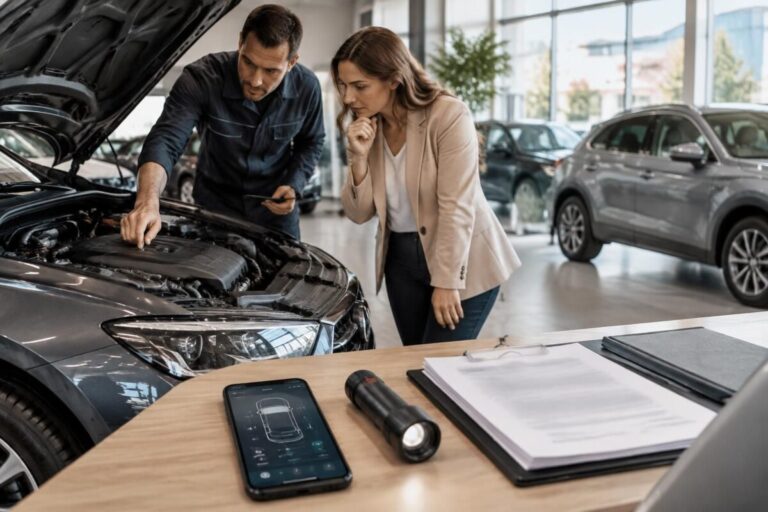
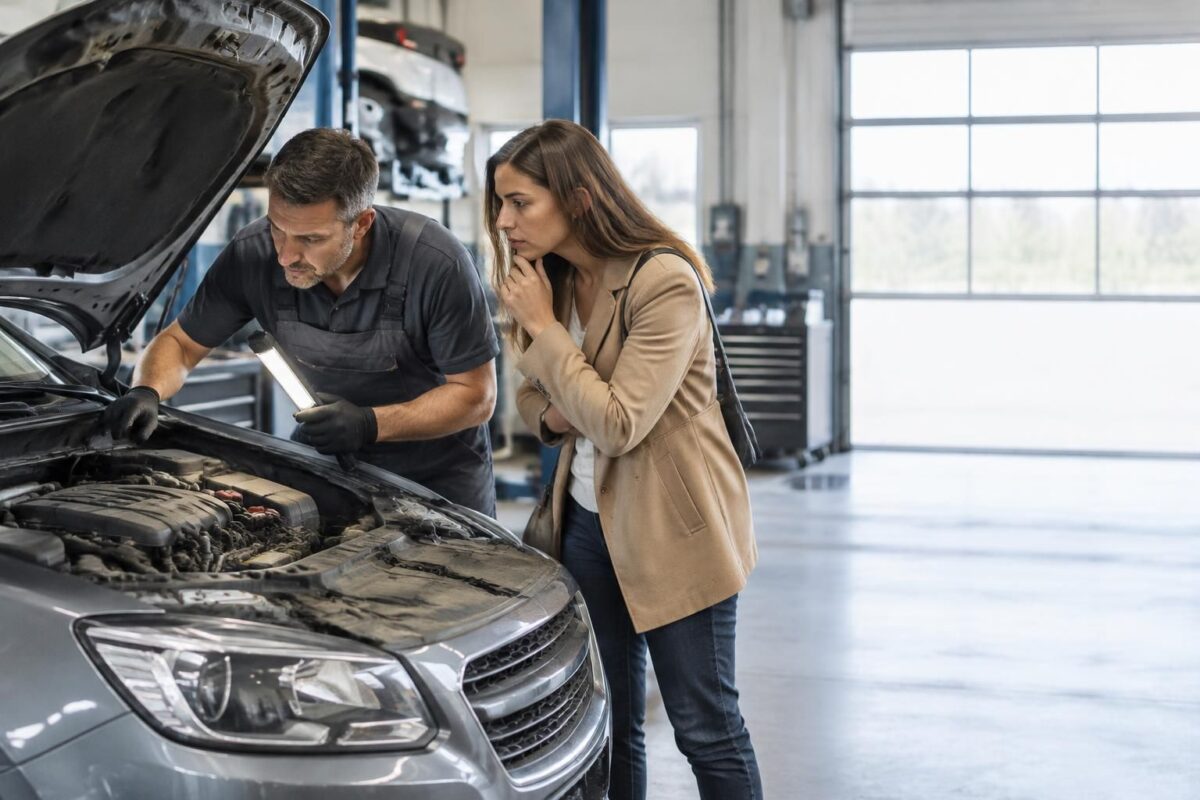
Under the hood, check the fluid levels, any signs of leaks and the general condition of visible components. If you don’t have mechanical knowledge, an inspection by an independent mechanic is often better than taking a gamble. Depending on the model and the fault, an unexpected repair can cost anywhere from a few hundred euros to considerably more.
Test the headlights, windows, air conditioning, driver-assistance features and dashboard warning lights. A warning light that goes out before you arrive, or a seller who refuses to let you check something, calls for a clear explanation.
Take a thorough test drive before making a decision
A quick spin around the block isn’t enough. Ask for a test drive long enough for the engine to warm up, so you can try the car on different types of roads while obeying the rules of the road.
Listen for noises when starting and accelerating. Check that the car brakes in a straight line, the steering doesn’t vibrate and the gears shift smoothly. If the seller refuses a test drive or insists on driving alone, put your decision off.
If it’s a small city car used mostly in town, take a close look at the clutch, brakes and cold starts. If it’s a diesel intended for long journeys, ask about the condition of the particulate filter and EGR valve.
Choose an engine type that suits how you drive
The right engine depends on your journeys, not on a trend. A diesel used almost exclusively in town may have problems related to the particulate filter, while a hybrid requires particular attention to the high-voltage battery.
| Engine type | Commonly suitable for | What to check |
|---|---|---|
| Petrol | City and mixed driving | Fuel consumption, maintenance and timing belt replacement interval |
| Diesel | Long journeys and motorways | Particulate filter, EGR and maintenance invoices |
| Hybrid | City and suburban driving | Battery condition and hybrid system operation |
| LPG | Regular use with access to filling stations | System maintenance and equipment certification |
Before settling on a specific model, check for known problems and the cost of wear parts. Two cars at the same price can have very different maintenance costs depending on their engine type, age and parts availability.
Buy without confusing a warranty with an absence of risk
When you buy from a dealer, the rules on the statutory legal guarantee of conformity also apply to used vehicles; however, how they apply depends on the circumstances and the defect identified. Between private individuals, the statutory warranty for hidden defects may also apply, but you must be able to establish that the legal requirements have been met. So the possibility of making a claim is no substitute for checks before the sale.
Get the important points agreed with the seller in writing, then check that the documents and payment details are consistent. Don’t pay any money before seeing the vehicle and confirming the seller’s identity. A good decision is one made without pressure.
Three steps to make your purchase safer
- Step 1: compare listings, set your total budget and ask for the documents before going to see the car.
- Step 2: inspect the car, check its history and arrange a test drive. Ask a mechanic for help if you still have any doubts.
- Step 3: estimate the cost of any upcoming work, negotiate based on verifiable facts and sign only once everything is clear.
The method may seem simple, and that’s precisely the point: every check leaves less room for unpleasant surprises.
What documents should I ask for before buying a used car?
Ask for the registration certificate, the roadworthiness test certificate if required, maintenance invoices and service book, as well as the certificate of administrative status. Also check the available information using the VIN.
Does a very low price necessarily mean it’s a scam?
No, but a significant difference compared with similar listings should be explained and verified. It may hide repairs, an incomplete history or an administrative issue.
Can I have the car inspected by my own mechanic?
Yes, ask the seller for permission to have an independent inspection before the sale. A refusal without a convincing reason is a warning sign.
Does a roadworthiness test guarantee that the car is reliable?
No. It provides information about certain safety items and defects identified on a particular date, but it doesn’t replace a mechanical inspection or a review of the vehicle’s history.
Thanks for reading; best wishes, Patrick