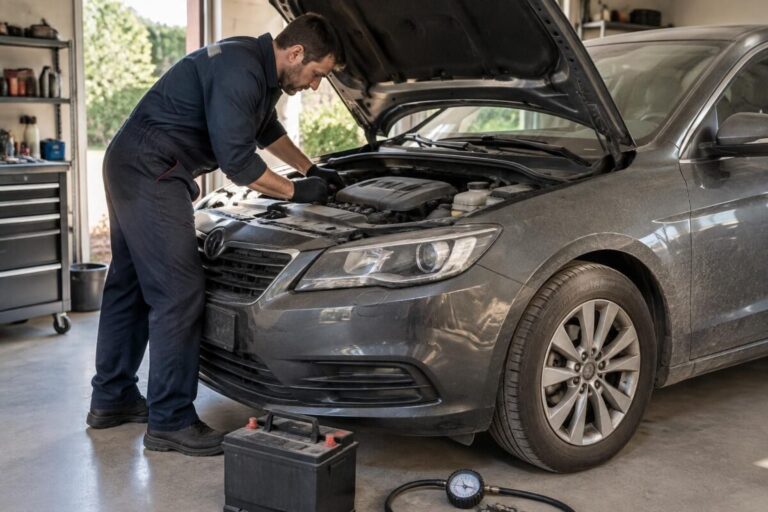

Car battery maintenance: should you replace it or charge it?
Hello, it’s Patrick.
If the battery is simply discharged, recharge it; if it is worn out or no longer holds a charge, replace it.
Difficulty starting doesn’t always mean you need to buy a new battery. A quick test can help distinguish a temporary problem from a battery that’s at the end of its life.
What to do right away
- Check that the terminals are clean, tight, and free of white deposits.
- Look for signs of a worn-out battery: slow starting, dim warning lights, or a battery that discharges frequently.
- Measure the voltage at rest with a multimeter, or ask for a battery test.
- Recharge it with a battery charger suited to the type of battery installed.
- Don’t recharge a swollen, cracked, leaking, or frozen battery: have it inspected and replace it if necessary.
To put this check in the context of general maintenance, also see these tips on car maintenance based on the car’s age and on choosing tools to avoid a repair going off track.
If the battery is discharged or worn out
A discharged battery may work again after a full recharge, especially if the headlights were accidentally left on or several short trips drained its reserve. Once recharged, however, it should retain enough power to start the car the next time.
If it discharges again quickly, the problem may lie with the battery itself, but it could also be the alternator or abnormal electrical consumption. So don’t decide to replace the battery based on a single failed start.
How to tell if recharging will help
A resting voltage of around 12.6 volts generally indicates a well-charged battery; at around 12.2 volts, it is heavily discharged. These values provide an initial indication, but a battery test under load is more reliable for assessing its actual capacity.
Use a charger compatible with the installed technology, especially AGM or EFB if your car is equipped with one of these battery types. Slow charging, following the manufacturer’s instructions, is preferable to repeated attempts to start the car, which put more strain on the battery.
How to spot a battery at the end of its life
A battery’s lifespan is often around 3 to 5 years, but cold weather, heat, and short trips can shorten it. If the engine turns over slowly despite a full recharge, or if the battery won’t hold a charge, replacement is likely necessary.
A practical example: after the lights have been left on overnight, a recent battery may work again after recharging. If the same vehicle won’t start a few days later and no electrical equipment was left on, have the battery and charging system checked before making a decision.
| Finding | Recommended action | What to check |
|---|---|---|
| Discharged after a one-off incident | Fully recharge | Whether it starts and holds its charge afterward |
| Slow starting and low voltage | Battery test | The battery’s capacity and the alternator |
| Swollen, cracked, or leaking battery | Replace without recharging | The cause of the failure and the safety of the installation |
| Old battery that discharges frequently | Test, then replace if it fails | Whether the new model is compatible with the vehicle |
Choosing between recharging and replacing the battery
Recharging the battery is appropriate if the discharge is an isolated incident and the test confirms that the battery can still store energy. Replacement is more often necessary when it no longer holds a charge, has physical damage, or fails the test.
Avoid replacing the battery without checking first: a faulty alternator can drain a new battery in turn. If in doubt, have both components checked before buying a replacement.
The 3-step procedure
- Inspect the battery. Check its condition, the terminals, and the manufacturing date; do not recharge it if the casing is damaged or swollen.
- Test and recharge if possible. Measure the voltage, then use a compatible charger and follow its instructions. After recharging, check whether the engine starts properly.
- Decide based on the result. If the battery fails the test or discharges quickly, replace it and have the charging system checked.
A properly maintained and tested battery helps prevent both premature replacements and repeated breakdowns: the right thing to do is check before you buy.
Frequently asked questions about car batteries
How long does it take to recharge a car battery?
The time depends on its capacity, how discharged it is, and the charger being used. A slow recharge can take several hours; follow the instructions provided with the charger and by the manufacturer.
Can you recharge a battery without disconnecting it?
It depends on the vehicle and the charger. Consult the car’s manual and use the specified connection points, especially on models equipped with electronic battery management.
Can a new battery discharge quickly?
Yes. A faulty alternator, a trip that is too short, or equipment that remains powered can drain it. Have the charging system checked if the problem recurs.
When should you replace a car battery?
Replace it if it is damaged, fails an appropriate test, or does not hold its charge after a full recharge. Also check that the new battery is compatible with your vehicle.
I hope these tips have been helpful. See you soon! — Patrick