
Scratched car in a parking lot: what to do without making things worse
Hi, Patrick here. If you find your car scratched in a parking lot, photograph the damage, look for witnesses and check your coverage before having it repaired or filing a claim.
The right steps to take depend mainly on two things: whether the person responsible can be identified and what coverage your policy includes. Keeping a few pieces of evidence safe can help you avoid an unnecessary claim or make it easier to seek compensation from the person responsible.
What to do first
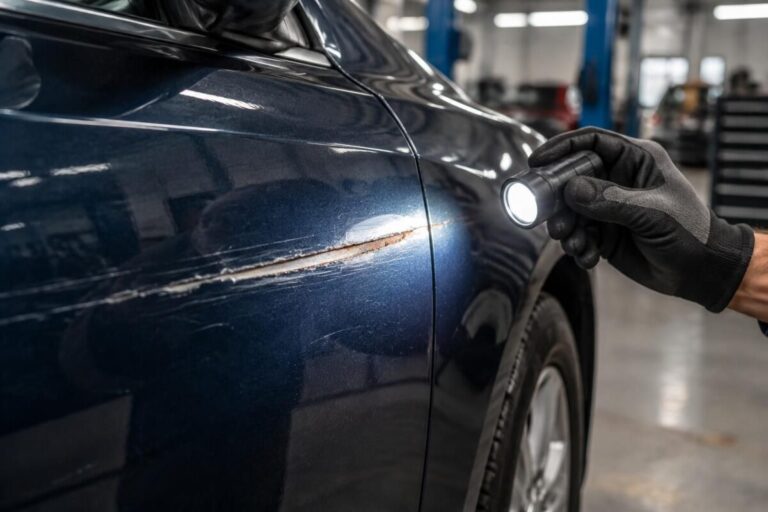
- Photograph the scratch from several angles, along with the parking space and its surroundings.
- Note the time and place where you discovered the damage.
- Look for witnesses to the incident and ask the parking lot manager to preserve footage from any surveillance cameras.
- Don’t clean or repair the bodywork before documenting the damage and checking your insurer’s instructions.
- Review your policy: vandalism or collision coverage, your deductible and the deadline for reporting a claim.
For guidance on what to do in different situations, also see this guide on the first step to take after finding a scratch and these tips on whether you should polish it right away.
Car scratched in a parking lot: who can pay for the repairs?
If the person responsible is identified, their liability insurance may cover the damage to your vehicle. A joint accident report signed by the people involved can help establish what happened, but read it carefully and keep a copy.
If no one is identified, third-party insurance generally won’t cover damage to your own car. Collision or vandalism coverage may apply, depending on your policy, often with a deductible.
| Situation | What you can do | What to check |
|---|---|---|
| Person responsible identified | Get their contact details and fill out a joint accident report. | How the claim is reported and classified by the insurers. |
| Person responsible unknown | Keep the evidence and contact your insurer. | Which coverage applies and the amount of the deductible. |
| Minor scratch | Get an estimate for bodywork repairs. | Compare the cost with the deductible before filing a claim. |
For example, if a repair estimate is 250 euros and the applicable deductible is 400 euros, filing a claim won’t necessarily result in compensation. Also check the exact coverage in your policy’s coverage table, as a mid-tier plan does not automatically cover vandalism.
Three steps to handle the claim without making things worse
1. Put together an evidence file
Take photos of the damage and the surrounding area before moving or cleaning the vehicle, if it’s safe to do so. Note when you discovered the damage, the exact location and the contact details of any witnesses.
If there’s a surveillance camera nearby, promptly ask the manager to preserve the footage. Access isn’t automatic: the manager, your insurer or the authorities can tell you what steps to take.
2. Check your coverage and the repair costs
Check your auto insurance policy and note the relevant coverage, the deductible and any applicable limit. Then compare those amounts with a bodywork repair estimate: a small scratch can sometimes be fixed at a low cost without filing a claim.
Don’t confuse filing a claim with receiving compensation. Your insurer may open a claim file even if the damage isn’t covered by your policy, particularly if the person responsible is unknown and you don’t have suitable coverage.
3. Report the claim on time and check how it’s classified
Notify your insurer according to the terms of your policy. The reporting deadline is generally five business days after discovering the damage, but check the applicable terms and send any available information: photos, details of what happened, an estimate and a joint accident report, if there is one.
A claim for which you’re not at fault should not result in an increase to your no-claims bonus when it has been correctly classified as such. Ask for written confirmation of the classification and check your insurance record once the claim has been processed.
Mistakes that can complicate a car-scratch claim
Polishing or repainting the bodywork before taking photos can make it harder to assess the damage. Wait for your insurer’s instructions if an assessment is planned, unless an urgent repair is needed for safety reasons.
Also avoid signing an incomplete or inaccurate accident report. If the person responsible is absent, don’t fill out a report as if they had admitted fault: describe only what you observed and ask your insurer how to document the situation.
If the compensation or claim classification seems wrong, start by submitting a written complaint to your insurer. If the issue remains unresolved, you can refer the matter to the Insurance Ombudsman free of charge after following your insurer’s complaints procedure.
Will a car scratched in a parking lot by an unidentified person be covered?
Not automatically. You generally need collision or vandalism coverage that applies to the situation. You may still have to pay a deductible.
Should you always report a small scratch to your insurer?
No. First compare the repair estimate with your deductible and check your policy coverage. If the cost is less than the deductible, filing a claim may not result in any compensation.
What should you do if the person responsible has left the parking lot?
Photograph the damage, look for witnesses and ask the manager to preserve any available footage. Report the situation to your insurer and the authorities if the circumstances warrant it. If the person responsible can’t be identified, compensation will depend in part on your coverage.
Can a scratch you weren’t responsible for affect your no-claims bonus?
A claim correctly classified as not your fault should not increase your no-claims bonus coefficient. Check the classification provided by your insurer and ask for a written correction if it’s wrong.
Thanks for reading! Feel free to share your thoughts in the comments. — Patrick